YC
RP
FS
RR
Young Curators Residency Programme
Every year since 2007 Fondazione Sandretto Re Rebaudengo promotes the Young Curators Residency Programme Torino. The project aims to support emerging curatorial practice while spreading knowledge of the Italian art scene on an international level.

Young Curators Residency Programme 2019 Coordinated by Lucrezia Calabrò Visconti
Fondazione Sandretto Re Rebaudengo, Turin, Italy April 15 – September 29, 2019
Capriccio 2000
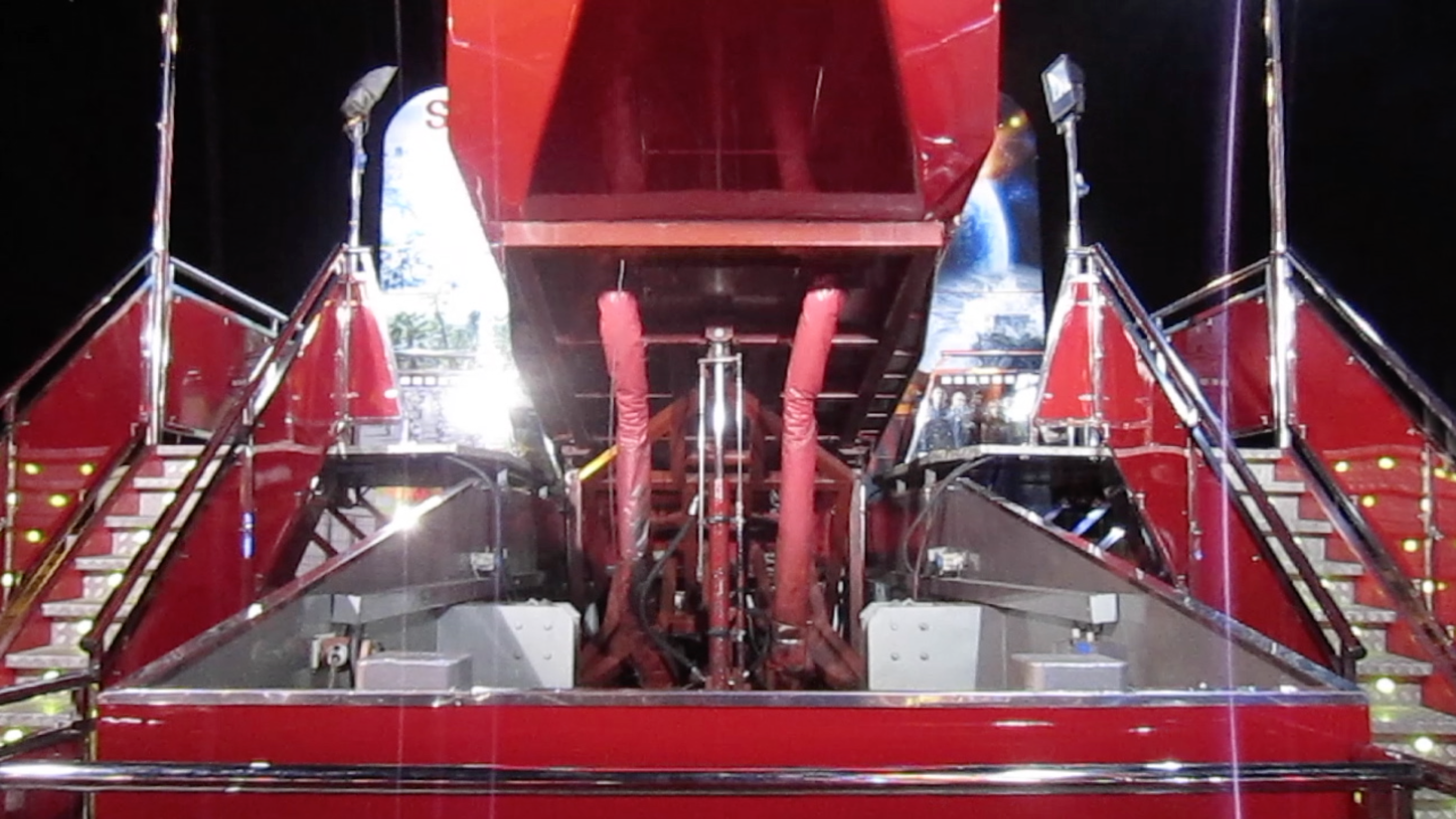
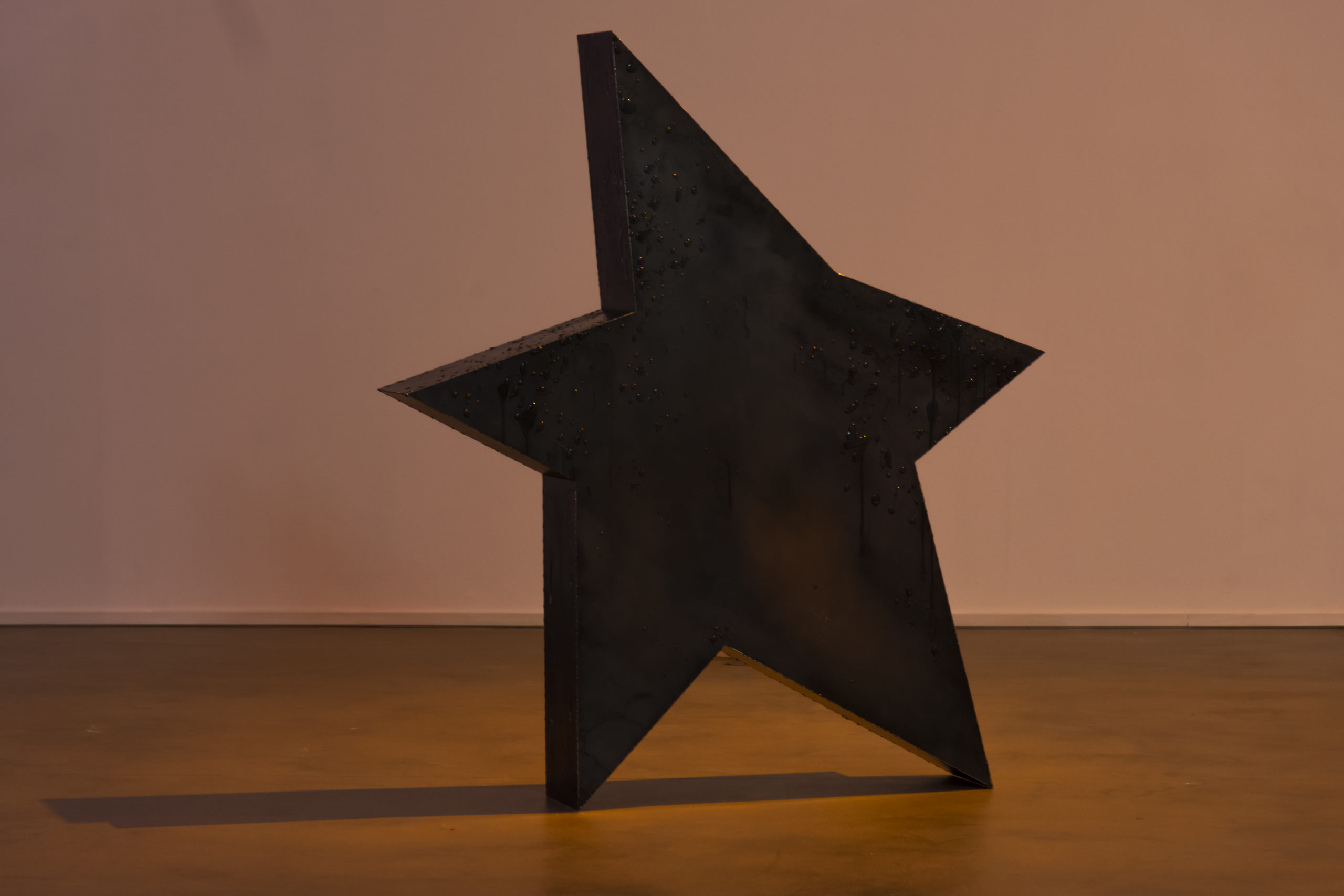
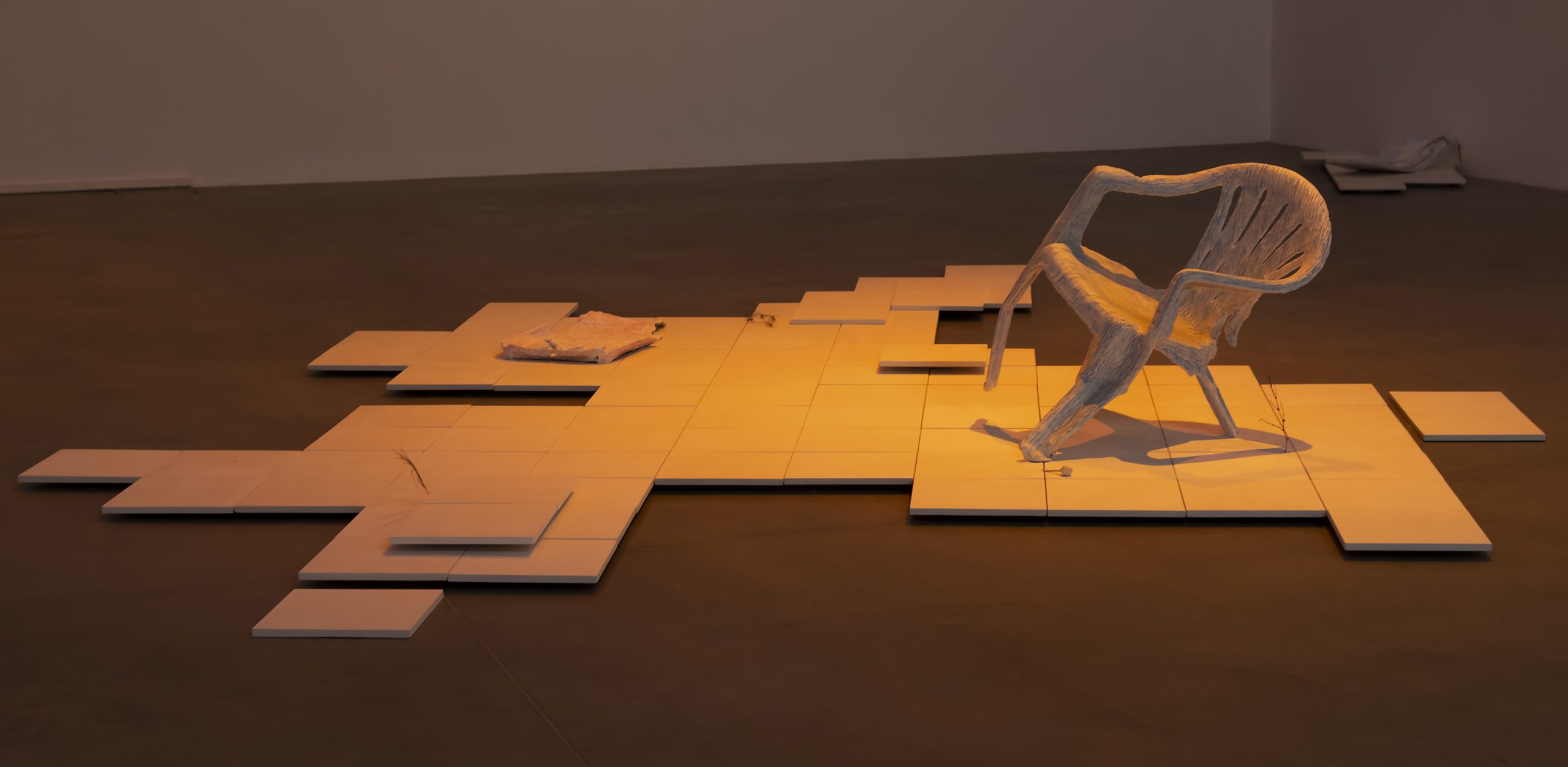
Capriccio 2000 is the final result of the 13th edition of the Young Curators Residency Programme. In music, a capriccio is a composition that takes a free-form approach to tempo and style. In painting, it refers to an architectural fantasy in which buildings and archeological ruins from different geographies and temporalities are placed together to form plausible, yet fictional landscapes. Gesturing to these connotations, the exhibition Capriccio 2000 traverses electronic dance music cultures in millennial Italy – particularly hardcore – to propose a sensory tableau: of listless bodies, ritualised gestures and neon hues amidst the detritus of suburban life. While several earlier instances of nightclub and rave culture have been canonized as spaces of resistance, hardcore, arriving in the 1990s, had a much more diffuse and nihilistic aesthetic. Directly interacting with mass cultural consumption from its onset, hardcore developed into a popular musical language in the early 2000s, proliferating within local youth scenes across Europe. Considered low-brow and folkloric by most, hardcore speaks to a unique cultural moment that arose from often overlooked geographies across Europe. Focusing on peripheral areas – from Turin in the north along the highway through Bergamo and Brescia to the suburban districts of Rome – the exhibition engages with youth culture as it emerged within the post-industrial landscapes of Italy. Such non-centralised spaces came to form the dominant culture of the time, influenced by styles seeping down from other cities in northern Europe whilst simultaneously developing their own distinct and idiosyncratic local languages. Within the exhibition, the notion of capriccio is adopted as a creative method of assemblage, in which elements are selected for their aesthetic and impressionistic sensibilities as opposed to notions of representational truth. Taken from the title of an installation by one of the exhibiting artists, Andrea De Stefani, Capriccio 2000 encompasses a range of approaches, from the direct engagement with histories of electronic dance music in the work of Michele Rizzo to a more abstract evocation of landscape in Dafne Boggeri’s hypnotic video work LIANE and the intimate paintings of listless youths by Giuliana Rosso.
Curators
Rosa Tyhurst
Rosa Tyhurst is a curator from South Wales and based in South London. She currently works as curator at Gasworks, London, where she collaboratively devises and delivers a programme of exhibitions, residencies, public programme and participation projects. Prior to Gasworks, she worked at Nottingham Contemporary and at Spike Island, Bristol. Rosa has curated exhibitions and programmes internationally, at the Wattis Institute, San Francisco (US); Cloaca, San Francisco (US); Royal Nonesuch Gallery, Oakland (US) and DREI, Köln (DE). In 2019 she participated in Fondazione Sandretto Re Rebaudengo’s Young Curator’s Residency Programme in Turin, Italy. Her writing has been published in Art Monthly, Elephant, Hyperallergic, Contemporary Art Reviews Los Angeles, ArtPractical, and she has contributed to publications on Veronica Ryan, Candice Lin and Peggy Ahwesh. Rosa is a graduate of California College of the Arts’ MA in Curatorial Practice.
Jeppe Ugelvig
Jeppe Ugelvig is a curator, historian, and critic based in New York City. He is the author of two books: Fashion Work (2020) and Commodity Ecumene (2024). As a curator, Jeppe has organized more than a dozen exhibitions in institutions and museums around the world, and conducted curatorial residencies and fellowships at MMCA Seoul, Delfina Foundation London, ISCP New York, and the Kramlich Collection in Napa, CA. As a critic, Jeppe has written extensively about the international art world for more than a decade, publishing regularly in Artforum, Frieze, and Spike Art Quarterly, where he serves as contributing editor. For the past decade, Jeppe has taught and lectured at universities around the world such as NYU, The New School, Goldsmiths, IUAV, CCS Bard, and Rutgers. Curated museum exhibitions include Endless Garment: Atlantic Basin at Pioneer Works in New York (2026), building on previous exhibitions staged at X Museum in Beijing (2020); The Cosmos Within at ARoS, Denmark (2022); Witch-Hunt at Kunsthal Charlottenborg (2020); Phantom Plane at Tai Kwun, Hong Kong (2019). With Hans Ulrich Obrist, he has curated numerous public art exhibitions and biennales, including the 2022 Future Ours at the United Nations and the 2023 and 2021 Charlottenborg Bienniales.
Hannah Zafiropoulos
Hannah Zafiropoulos (Greece, 1992) is a curator, researcher and writer living and working in London and Stockholm. Her practice departs from the possibilities of the emergent field of ‘the curatorial’ to inspire new methodologies and modes of curatorial research, with a particular focus on performativity and participation. Using live action role play as a starting point, her research develops a methodology of ‘procedural authorship’ through which a curator may open up spaces of renewed democratic participation in which diverse voices can participate in the process of meaning and the production of new knowledges. She has worked as Assistant Curator at Calvert 22 Foundation, London and has previously curated projects at Gasworks, London and Tensta konsthall, Sweden, where she will hold the position of Guest Curator for 2019, developing a research programme around the history and methods of the Fogelstad Women’s Citizenship School. From 2013-16, she was Director of Exhibitions at Howard Griffin Gallery, London. She regularly writes for publications including Art Review, The Calvert Journal, Apollo and Koreografisk Journal and has recently co-edited the forthcoming publication Red Love: Reading Alexandra Kollontai (Sternberg Press, 2018). She holds a BA in History of Art from the Courtauld Institute of Art and an MA in Curating Contemporary Art from the Royal College of Art, and has recently participated in the curatorial research programme CuratorLab at Konstfack University of Arts, Stockholm.
Coordinator
Lucrezia Calabrò Visconti
Lucrezia Calabrò Visconti (Desenzano del Garda, 1990) is a curator and art writer. She is currently Head Curator at Istituto Svizzero in Italy, where she curates the programmes across its venues in Rome, Milan, and Palermo. Her recent projects include the monographic exhibition how we always survived by Pauline Boudry / Renate Lorenz and the group show Con lo zucchero in bocca in Rome; the exhibitions Deadline With The World by Gabriele Garavaglia and Miriam Laura Leonardi and The House of Dorothy by Vincent Grange in Milan; and the public programme Time is on my side by Helvetropicos in Palermo (all 2025). She previously served as Chief Curator and Head of the Curatorial Department at Pinacoteca Agnelli in Turin. At Pinacoteca Agnelli, she curated and co-curated major monographic exhibitions such as Salvo. Arrivare in tempo; Lee Lozano. Strike (Pinacoteca Agnelli and La Bourse – Pinault Collection, Paris, 2023–2024); and Sylvie Fleury. Turn Me On (2022); as well as new commissions including Dominique Gonzalez-Foerster. PISTARAMA and exhibitions such as Lucy McKenzie and Antonio Canova. Vulcanizzato (2023). For Pinacoteca’s Pista 500, she curated projects and new commissions by artists such as Chalisee Naamani, Monica Bonvicini, Shirin Aliabadi, Nina Beier, Julius von Bismark, Mark Leckey, Cally Spooner, VALIE EXPORT, Sylvie Fleury, Liam Gillick, Marco Giordano, Nan Goldin, Shilpa Gupta, Louise Lawler, Alicja Kwade, SUPERFLEX, among others. She curated exhibitions and programmes for institutions in Italy and abroad. In 2018 and 2019, she was the curator of the New Entries section at Artissima, Turin. In 2018, she curated the main exhibition of the 6th Moscow International Biennale for Young Art, titled Abracadabra, and co-founded the collective platform The School of the End of Time, with whom she co-curated the public programme accompanying the Biennale. From 2018 to 2021, she worked at Fondazione Sandretto Re Rebaudengo as curator and head of the Young Curators Reisdency Programme. From 2015 to 2018, she co-founded and curated the programme of CLOG Project, a research-driven independent space with a focus on contemporary arts and culture, autonomous education experiments and self-production projects. As a writer and journalist, her essays and texts have been published in various exhibition catalogues, publications and journals. Her book In the studio: Lee Lozano was recently published by Hauser & Wirth Publishers (2025). She is a co-founder and currently vice-president of AWI – Art Workers Italia, the first association established to advocate for contemporary art workers in Italy, since 2020; and she sits on the board of the Milano Art Community since 2025. She received her education in visual and performing arts from IUAV University in Venice, in curatorial studies from De Appel, Amsterdam and Fondazione Sandretto Re Rebaudengo, Turin, and specialised in critical social theory at the University of Milan – Bicocca and at the Critical Curatorial Cybermedia research Master at la HEAD, Geneve.
Artists
- Dafne Boggeri
Dafne Boggeri was born in 1975, Tortona, Alessandria, Italy. She lives and works in Milano.
![]()
LIANE, 2017
Still video
Courtesy of the artist - Caterina De Nicola
Caterina De Nicola was born in 1991, Ortona (CH), Italy. She lives and works in Milano, Italy.
![]()
More Friends, 2019
Various materials, dimensions variable
Courtesy of the artist - Andrea De Stefani
Andrea De Stefani was born in 1982 in Arzignano, Italy. He lives and works in Venice, Italy and Vicenza, Italy.
![]()
Dry Landscape (Babylon Beach), 2018
Plaster, dimensions variable Courtesy of the artist
- Lorenza Longhi
Lorenza Longhi was born in 1991, Lecco, Italy. She works between Milano, Italy and Losanna, Switzerland.
![]()
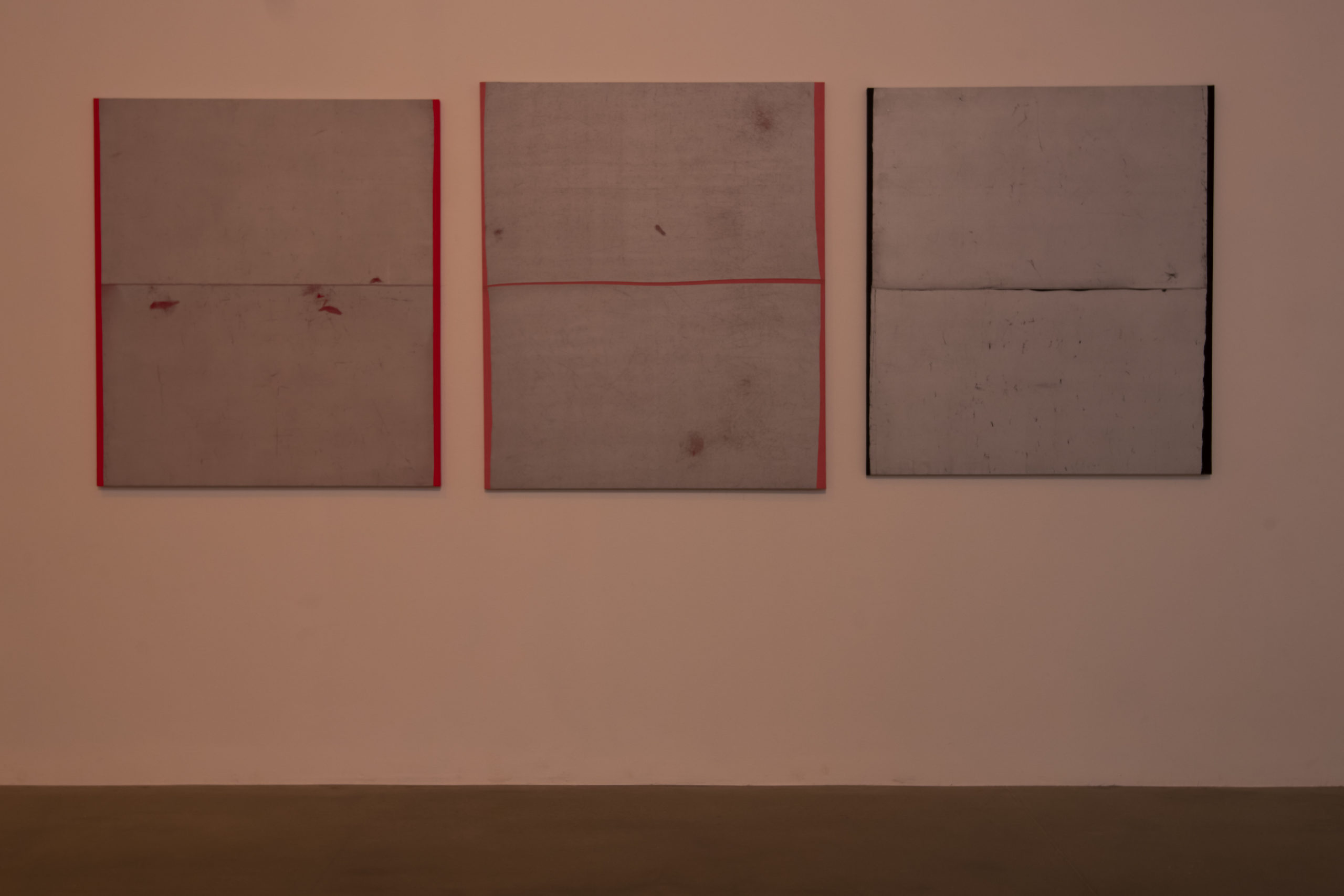
Today is Great (La Vita Dolcissima), 2017
Silkscreen and etchings on fabric
Courtesy of the artistToday is Great (Crazy Color), 2017
Silkscreen and etchings on fabric
Courtesy of the artistToday is Great (Perfect Match), 2017
Silkscreen and etchings on fabric
Courtesy of the artist - Andrea Magnani
Andrea Magnani was born in 1983, Faenza (RA), Italy. He lives and works in Milano, Italy.
![]()
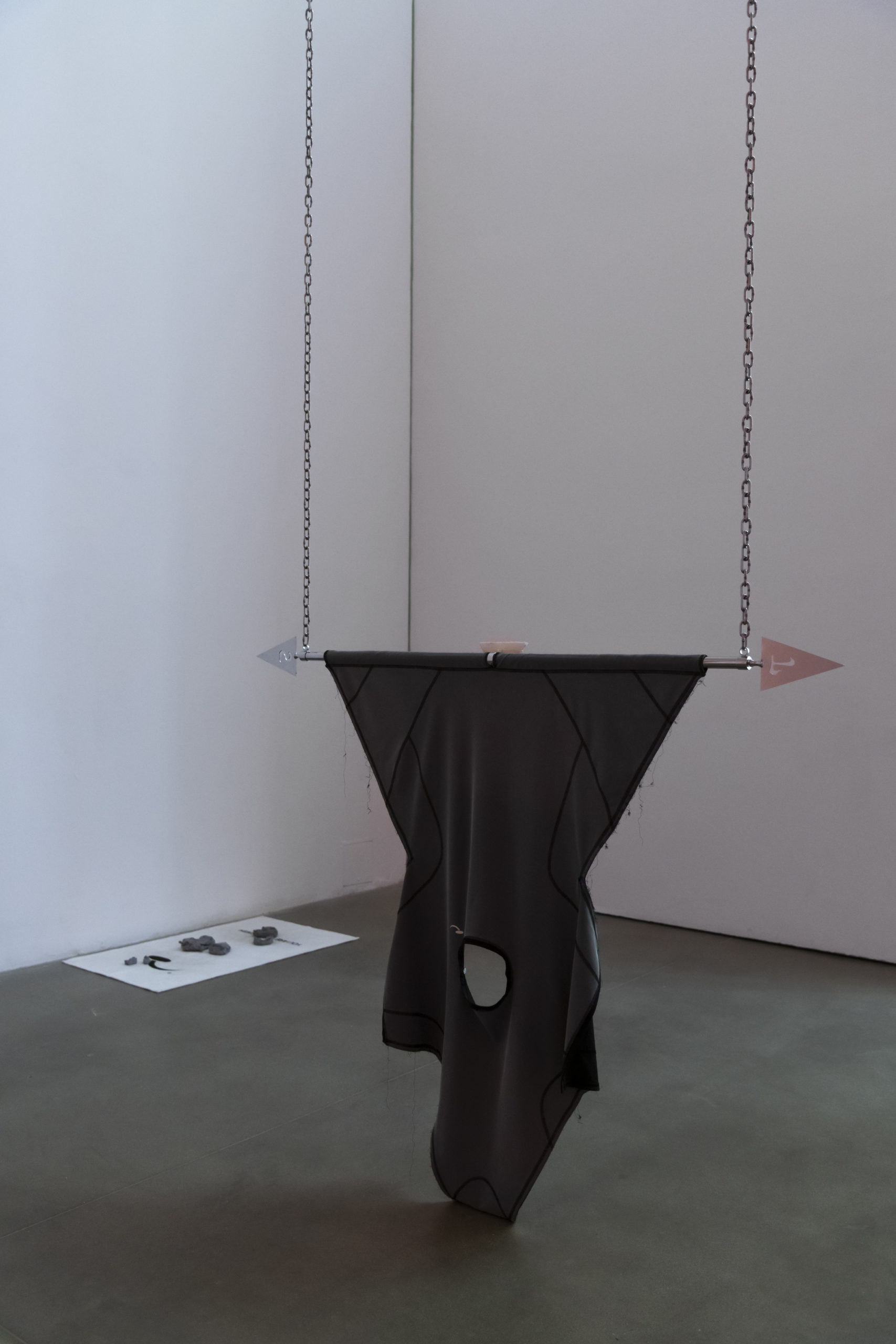
The Divination Running Project, 2012-ongoing
Silkscreen print,
sweat and dirt on handsewn fabric; digital print on
bespoke fabric label; laser cut, chromed banner support;
snap-hooks; chains; 3D print; digital print and pencil
on box; tissue paper; digital print on paper; UV print
on microfiber towel; stoneware. Dimensions variable
Courtesy of the artist - Michele Rizzo
Michele Rizzo was born in 1984, Lecce, Italy. He lives and works in Amsterdam.
![]()
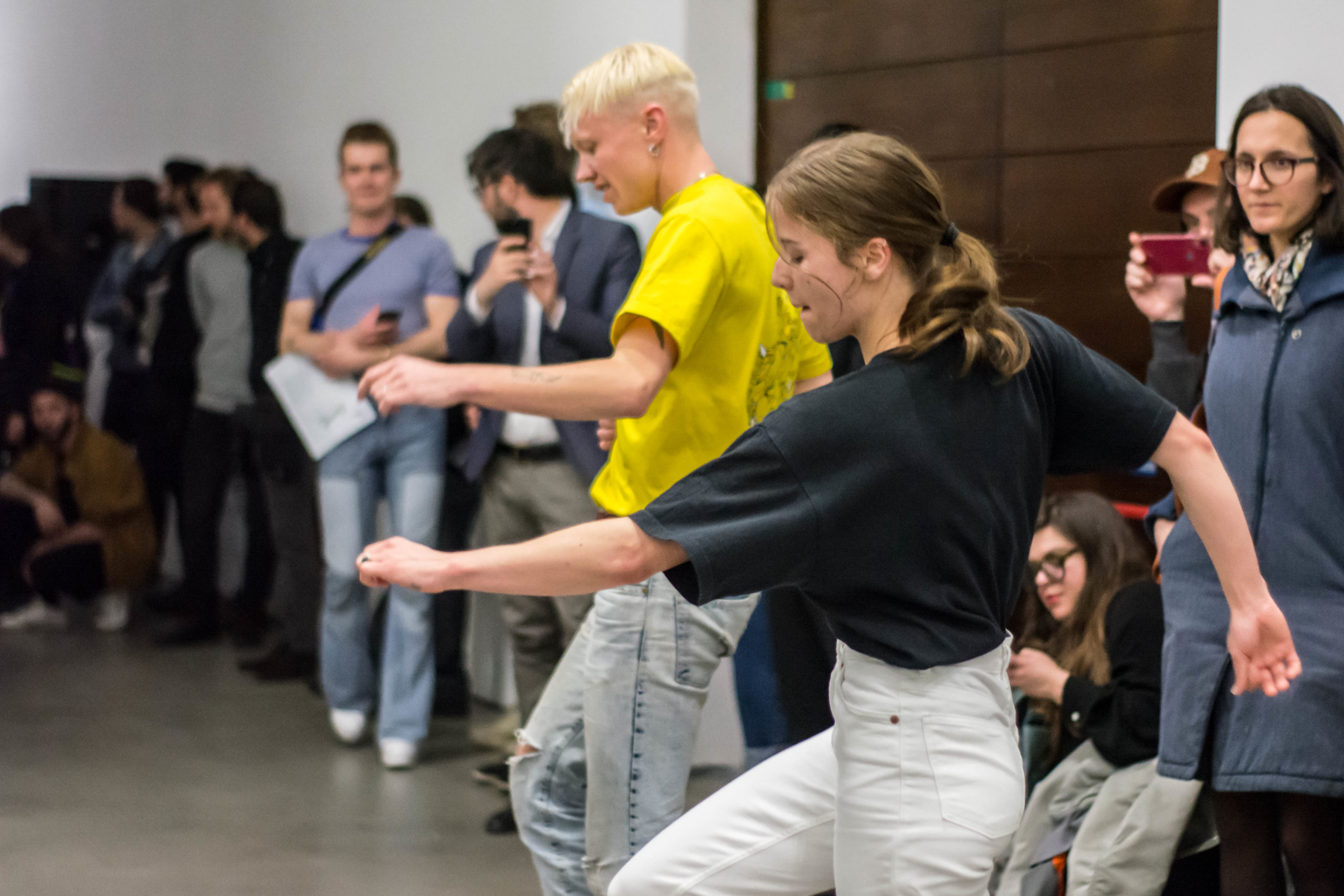
HIGHER xtn, 2019
Performance
Courtesy of the artist - Giuliana Rosso
Giuliana Rosso (b. 1992) lives and works in Turin. Her practice develops through painting, drawing, sculpture, and installation, as well as through the relationships that emerge between them. Her research investigates what emerges when perception and verbal language are destabilized, making visible emotional states, impulses, and forms of non-rational knowledge. The adolescent figure recurs as an emblem of a psychological and emotional condition through which to observe the social transformations of the present. Her works construct images and environments in which the boundary between inner experience and material reality remains permeable: fear, desire, shame, aggression, and loneliness take shape through presences, metamorphoses, and apparitions. Alongside oil painting, Rosso uses graphite, charcoal, chalk, papier-mâché, and reclaimed materials, extending painting beyond the surface of the canvas. References to psychology, literature, and art history intertwine with the Neon Ooze aesthetic of youth culture and the imagery of toys from the 1990s and early 2000s. Her works transform fragile materials into unstable forms, suspended between familiarity and the uncanny, permanence and dissolution.
![]()
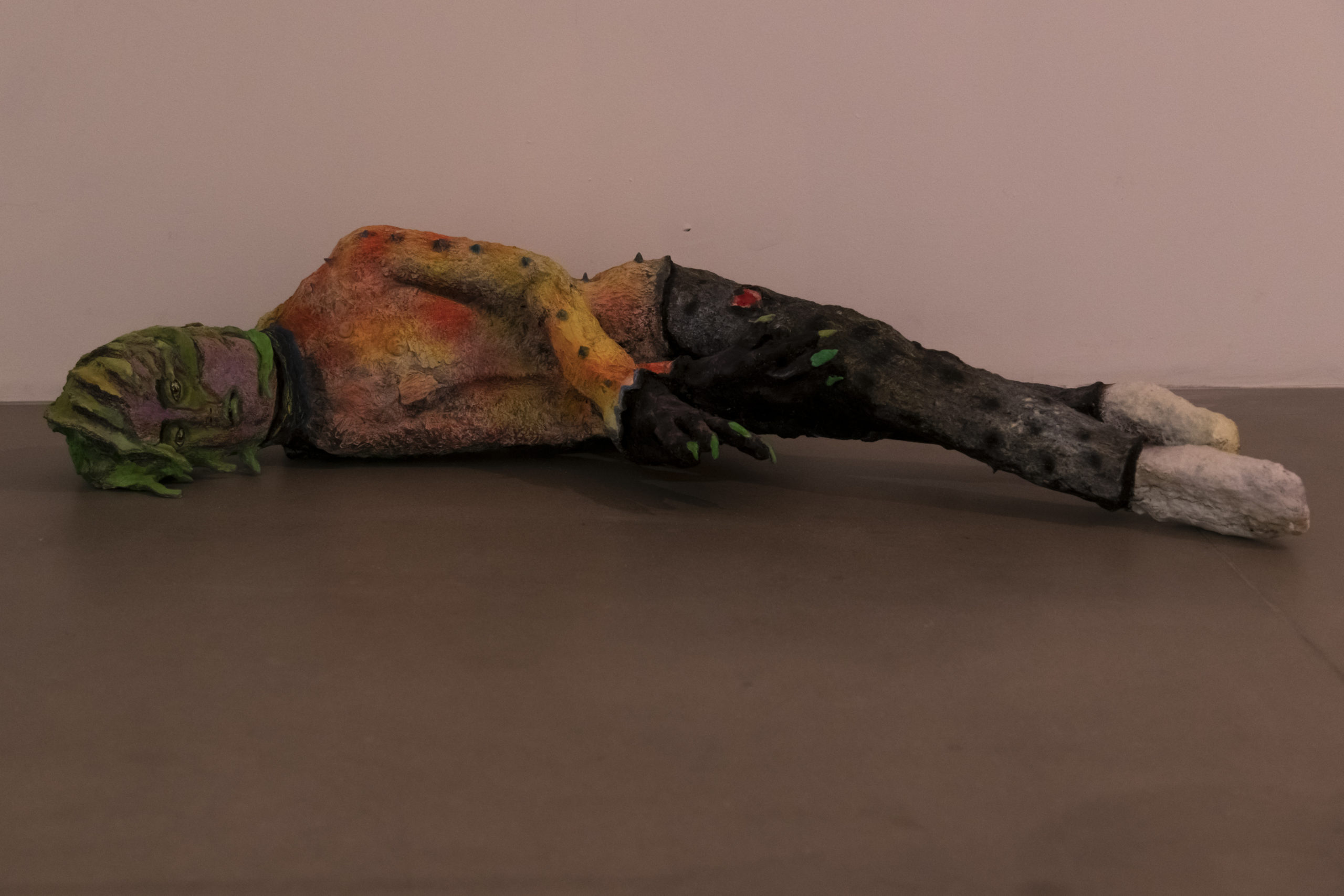
I vetri rotti balleranno per la notte, 2019
Papier-mache sculpture
Courtesy of the artist
Jury
Mark Rappolt
Mark Rappolt is editor in chief of Art Review and founder of Art Review Asia. He has been editor at AA Files, the journal of the Architectural Association of London, where he has also lectured as well as curated a project on the writings of texts still to be translated by George Perec and other unpublished works by members of Oulipo. His texts have been featured in several publications, such as The Times, Die Zeit, i-D and Citizen K, as well as in various exhibition catalogues, such as those dedicated to Slater Bradley, Alex Katz, Bharti Kher, David Cronenberg and more recently Yuko Mohri and Joh Kømer. Among his books are also monographs dedicated to architects Greg Lynn and Frank Gehry. He is currently co-curator of Xiàn Chãng, a major exhibition of one-artist projects that takes place within West Bund Art & Design Fair of Shanghai. New productions have been commissioned to artists from south-east and far east Asia, with the first projects involving artists Ming Wong and Michael Lin.
Andrea Viliani
Andrea Viliani is an art critic and curator and, since 2013, Director of the MADRE, the public museum of contemporary art founded by Campania Region in Naples, where he organised exhibitions by Francis Alÿs, Thomas Bayrle, Daniel Buren, Mimmo Jodice, Mark Leckey, Fabio Mauri, Boris Mikhailov, Giulia Piscitelli, Vettor Pisani,Walid Raad, Ettore Spalletti, Sturtevant, Padraig Timoney, Mario García Torres/Alighiero Boetti. At MADRE he has produced as well seminars and publications by artists such as Gusmao&Paiva, Stephen Prina and Akram Zaatari and oversaw the ongoing projects Per_forming a collection and Progetto XXI. From 2009 to 2012 he worked as Director of the Fondazione Galleria Civica-Centro di Ricerca sulla Contemporaneità, Trento (Italy); from 2005 to 2009 he was Curator at MAMbo–Museo d’Arte Moderna, Bologna (Italy) where he presented an exhibition program focused on the contemporary legacy of the 60s/70s institutional critique and on a possible new approach to it (“institutional narrative”). From 2000 to 2005 he worked as Assistant Curator at the Castello di Rivoli-Museo d’Arte Contemporanea, Torino (Italy). In 2012 Viliani was one of the six curatorial Agents/Core-Group of dOCUMENTA (13), co-curating with the Artistic Director Carolyn Christov Bakargiev and Aman Mojadidi the related position in Kabul and Bamiyan (Afghanistan). He also curated exhibitions and projects in various other institutions as, among the others, Paweł Althamer (MUSEION, Bolzano, Italy), Gabriele Di Matteo (FRAC Limousin, Limoges, France), David Maljković (GAMeC, Bergamo, Italia), Deimantas Narkevičius (Museo Marino Marini, Firenze, Italia) and Haris Epaminonda (Fondazione Querini Stampalia, Venezia, Italy). Among the 60 “players” of the 2007 Biennale de Lyon, he is a contributor to the art magazines Flash Art, FROG, Kaleidoscope and Mousse.
YCRP.FSRR.ORG
©2026 Fondazione Sandretto Re Rebaudengo