YC
RP
FS
RR
Young Curators Residency Programme
Every year since 2007 Fondazione Sandretto Re Rebaudengo promotes the Young Curators Residency Programme Torino. The project aims to support emerging curatorial practice while spreading knowledge of the Italian art scene on an international level.
Young Curators Residency Programme 2014 Coordinated by Gaia Tedone
Fondazione Sandretto Re Rebaudengo, Turin, Italy May 21 - September 7, 2014
Così Accade (As it Happens)
So it happens, as it happens. Chance prescribes the outcome. Così Accade is the influence of chance and the recurrence of circumstance. It alludes to the experience of an eight-month curatorial project that begins with a four-month residency and culminates in a four-month public display. The bringing together of three distinct perspectives in order to touch the surface of an Italian art context. Without claiming to be a survey of Italian art, the exhibition is a measurement of its time and the shifting parameters that bring artworks together, an opportunity to estrange and make strange.
The exhibition brings together the work of eight artists whose practices span over five decades. The diverse selection of works—including multiverse moving image, hyper-text paintings, and sculptures composed of fugitive materials—make reference to forms of repetition and material memory. Among the works presented are an installation produced in collaboration with animals and a series of instructional images associated with recipes, alongside a selection of works from the Fondazione Sandretto Re Rebaudengo collection.
The show alludes to the collapse of time and the blurring of the real—the mysticism that surrounds making, process, objects, and absence, and the stratification and distortion of memory. The metaphorical ‘end’, the division of one’s day, the ink that runs out, and this time shared together. Performative gestures and the mark of the hand, and a moment in which we are uncertain about who was here, why this is happening, and who was here last. So it happens.
Curators
João Laia
João Laia (Lisbon, 1981) is a writer and curator. Holds a BA in Cultural Communication, MAs in Film Curating and Film Studies and the post-graduate curatorial research programme CuratorLab. He is a contributor of Frieze magazine and Público newspaper, content researcher for the Modern Art Centre of Calouste Gulbenkian Foundation, Lisbon, and curator of the moving image exhibition of IndieLisboa International Film Festival. In 2012 he was associate curator of Waterpieces – Contemporary and Video Art Festival in Riga. Recent curatorial projects were held at BES Arte e Finança in Lisbon, CCCB – Center for Contemporary Culture of Barcelona, Moderna Museet in Stockholm, Cell Project Space, the Mews and Whitechapel Gallery in London. My background in social sciences has led me to explore the exhibition as a moment where the equation between artistic autonomy and social belonging is tested and enacted by the combined actions of artist, curator and audience. My early interest in public art has evolved towards an understanding of the white cube/black box as a site of tension between private and public spaces. In an attempt to explore the friction between personal and collective dynamics regarding the intimate layerings of the visitor’s experience and of artistic production, I have focused on subjectivity as a means of investigating how the live encounter-event relates to individual frames of reference and likewise how a wider living environment can be recalled, questioned and reconfigured through such moment. In this sense, my projects have explored the idea of cultural production-consumption, conceiving the exhibition as a forum for reflection, investigation and exchange, a fluid space of inquiry via the articulation of different practices that not only incorporate the physical space of presentation into their structure but also and objects in settings such as displays, talks or screenings. These considerations have led me to engage with site-specific especially take into account the immaterial context of the social and symbolical dynamics inhabiting that location. I have been particularly drawn to topics related to history and memory, which I problematise around speculative types of engagement: the mechanisms used to disseminate past and present events hold fictional layers that allow for subjective interactions. My practice looks at these potentialities and aims at creating situations where dominant frames of understanding might be questioned and re-created.
Kim Nguyen
Kim Nguyen (Winnipeg, 1983) is the director/curator of the non-profit space Artspeak, Vancouver (Canada), where she has produced numerous exhibitions and publications by regional, national, and international artists, including Aaron Flint Jamison, Marina Roy, Abigail DeVille, Danh Vo, and Alex Da Corte. In 2009 she obtained a Masters in Art History (Critical and Curatorial Studies) at the University of British Columbia, Vancouver. Formerly a director and curator at Access Gallery, she has guest curated for the Belkin Satellite, PLATFORM, and the Or Gallery, where she was Canada Council Curator-in-Residence from 2009-2010. Artspeak is an artist-run centre whose mandate is to present contemporary practices, innovative publications, bookworks, editions, talks and events that encourage a dialogue between visual art and writing. Working within this mandate Nguyen continually challenges the notion of language, seeking overlaps between the written word and material communication, while extending the definitions of criticality beyond theoretical texts. Frequent themes in her practice include representations of diversity in popular culture, anxiety, and gossip. She is interested in artists working with vernacular materials to respond to contemporary conditions, with a focus on artists who investigate constructions of identity, nostalgic authenticity, and acquired and invented memory. As well, she maintains an interest in independent publishing within an artist-run ethos, particularly projects that investigate the publication as an artistic medium. Explorations of a sense of place remain a throughline in Nguyen’s work, in particular with recent exhibitions she has curated that look at running away from and returning home, geographic displacement, and cultural appropriation. Issues of class, race, and gender, and their persistent complications and disappointments, greatly inform her practice, and she is committed to extending the knowledge and presentation of diverse artists into a wider discussion of how audiences recognize, integrate, and engage with work that is innovative and progressive beyond its cultural definitions.
Marina Valle Noronha
Marina Valle Noronha (Brazil, 1981) is an independent curator who lives and works between New York and Belo Horizonte (Brazil). After taking part in the CuratorLab at the University of Art and Design Konstfack Stockholm (2010), she obtained a Master’s Degree in Curatorial Studies at CCS Bard, Annandale-on-Hudson (2013). She has curated several exhibitions and projects at institutions in Brazil and Europe including The Showroom (London), Casco (Utrecht, Netherlands), Moderna Museet (Stockholm) and has recently collaborated with the Museo del Barrio and Abrons Arts Center, New York (2013 – 14). Noronha’s curatorial focus is on the crossings between art, design and theory. She has been emphasizes the relationships between temporary exhibitions and permanent collections, proposing curatorial strategies that connect systems of display to the administrative processes that they depend upon. Curatorial (Systems) Manifesto: On Collecting and Curating as a System Museums and art collecting institutions are not sustainable and are in crisis. When the museum collection is considered to be permanent, museums become larger and less manageable institutions. Museums are not repositories, and to analyse them as open systems ensures them a new form of survival. Curating must internally transform through a curatorial system that aims to stabilise it within the hosting institution, by overemphasising maintenance, adjustment, and equilibrium. A paradigm shift from objects to systems allows a broader approach towards the system of contemporary art. Curating systems extends to the contemporary art economy in relation to domains such as law, science, politics, and so on. Curators’ roles are not defined narrowly by exhibitions making. Collection curating should be more theorised and visible by factors contained in all of these systems. In order to justify the high cost of maintaining collections, they should circulate more often (and thus be seen by more visitors). In order to keep operating, museums need to balance more accessions and deaccessions, as part of collection management. Effective collection management can help the museum in crisis and, moreover, disposals, though seldom used, have a significant role in collections formation. By collecting through balancing accession and deaccession, contemporary art institutions can actually reflect on what we understand as museum and the status of contemporary art itself. It accommodates collections in constant flux of accessioning and deaccessioning artworks, through acquisition, exchange, donation, transfer, exchange, and sale. Marina Valle Noronha is currently undertaking a PhD at Aalto University.
Coordinator
Gaia Tedone
Gaia Tedone (b. 1982) is a human-centered AI curator, a digital humanist and a researcher. She holds a BA in Economics for the Arts, Culture and Communication from Luigi Bocconi University, Milan (2005), an MFA in Curating from Goldsmiths College, London (2008), and was a Curatorial Fellow of the Whitney Independent Study Program, New York (2010). In 2013–2014, she was granted a Curatorial Fellowship funded by the Arts Council of England and organised by Whitechapel Gallery and Contemporary Art Society in collaboration with the Brighton & Hove Museums. The results of this period of research across the South of England culminated in the exhibition entitled Twixt Two Worlds, which was on show at Whitechapel Gallery, London during the summer of 2014 before touring to Towner Art Gallery, Eastbourne. In 2011, within the framework of the Whitney Independent Study Programme, she worked on the conception and production of the group exhibition Foreclosed. Between Crisis and Possibility, which took place at The Kitchen in New York, and coordinated its extensive public programme and catalogue (Yale University Press, 2011). She curated the photographic group show Rotta di Collisione (Artopia, Milan, October 2013) and co-curated with Christine Takengny the group exhibition Shifting Gazes (Guest Projects, London, January 2013). From 2012 to 2013, she worked within Tate Modern’s curatorial department, assisting on acquisitions and displays for the Collection of Photography and International Art and was involved in the planning and organisation of photography displays. Alongside assisting in the management of the Photography and Middle East and North Africa Acquisitions Committees, she undertook substantial research for the collection of time-based media art. Previously, she was an assistant curator in charge of Exhibitions, Projects and Collection at The David Roberts Art Foundation, London (2008–2010), where she actively contributed to the conception and delivery of audience-focused exhibitions and events in collaboration with international artists and curators. She was curator at Contemporary Art Society & Whitechapel Gallery, London (2013–2015); between 2015 and 2019, she was Freelance Curator, Researcher and Educator between Milan and London, and Researcher at the Lucerne University of Art & Design (2019–2022). From 2021 to 2023, she was Head of the Painting and Visual Art School at LABA, Brescia, and Lecturer in Performativity of Digital Culture; since 2019, she has been Lecturer in the MA in Museology, Museography and Management of Cultural Heritage at the Catholic University of Milan; in 2021, she founded, with Marialaura Ghidini, the curatorial agency ://ftp; since 2022, she has been Lecturer at NABA, Milan, in Multimedia Languages; since 2024, she has been Lecturer at the University of Bergamo in Artificial Intelligence for Digital Humanities and Machine-based Reading and Digital Methodology, and Lecturer at Scuola Politecnica del Design in Visual Culture Theory and Practice.
Artists
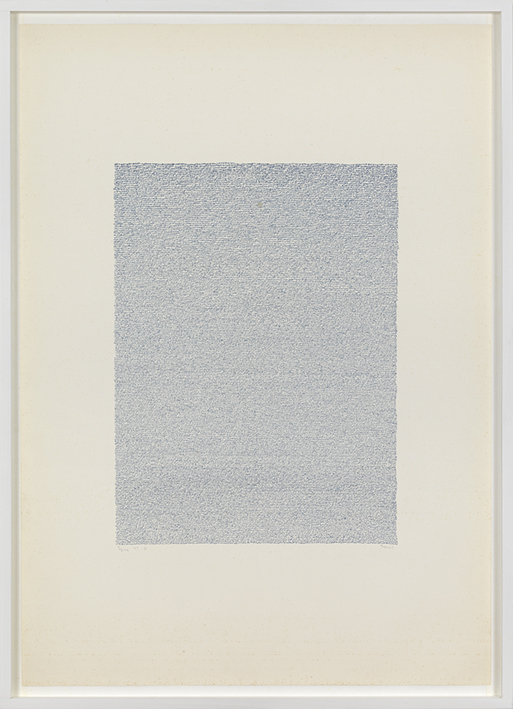
- Irma Blank
Irma Blank was born in 1934, Celle, Germany. She lives and works in Milano, Italy.
![]()
Eigenschriften, Pagina K-45, 1970
Pastel on paper, 70 X 50
Courtesy of the artist and P420 Arte Contemporanea, Bologna, Italy - Invernomuto
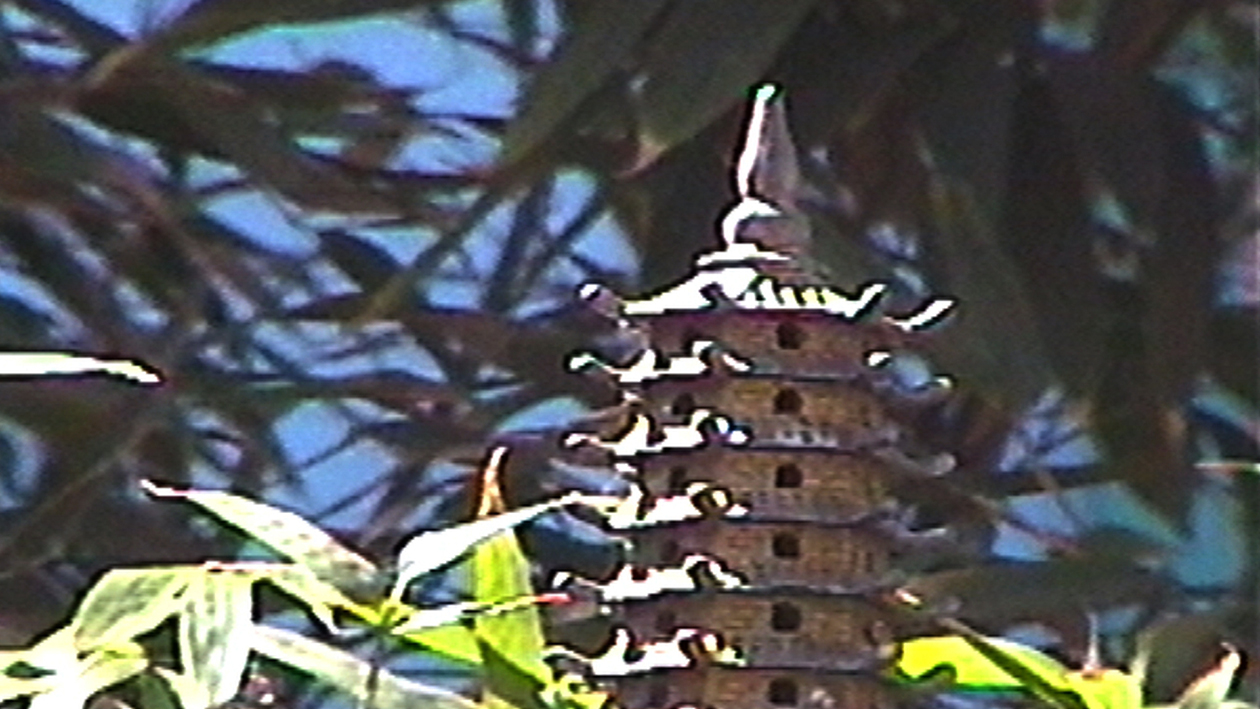
Invernomuto is the name under which Simone Bertuzzi and Simone Trabucchi have worked together since 2003. Based in Milan, they develop long-term research projects that unfold across time and space, generating interconnected cycles of work. Recent projects have been presented at Haus der Kunst, Munich (2026); SALTS, Basel; e-flux, New York; Performa, New York; Fondazione Prada, Milan; GAMeC, Bergamo (2025); Cabaret Voltaire, Zurich; and Bourse de Commerce, Paris (2024). Their work has also been presented at the 58th Venice Biennale; Tate, London; Liverpool Biennial 2021; Manifesta 12, Palermo; Pompeii Commitment; 58th October Salon-Belgrade Biennial; Kunstmuseum Liechtenstein, Vaduz; Villa Medici, Rome; CCS Bard, New York; Alserkal Avenue, Dubai; Nuit Blanche 2017, Paris; Museion, Bolzano; OGR, Turin; Centre d’Art Contemporain, Geneva; MAXXI, Rome; MACRO, Rome; PAC, Milan; Fondazione Sandretto Re Rebaudengo, Turin; HangarBicocca, Milan; No Fun Fest 2009, New York; and the 11th Venice Architecture Biennale.
![]()
Wax, Relax, 2011
Wax, variable dimensions (installation view at Simone, Padiglione d'Arte Contemporanea, Ferrara, Italy)
Courtesy of the artists
- Jacopo Milani
Jacopo Miliani is a visual artist and filmmaker based in Milan. Working across performance, installation, moving image, photography, collage, publishing, and film, his practice explores the relationships between language, the body, and visual culture, with a particular focus on queer subjectivities, desire, and the performativity of identity. Miliani approaches performance as an expanded methodology that extends across different media, investigating how gestures, speech, choreography, and cinematic language shape collective imaginaries. He currently teaches at IUAV University of Venice and the Accademia di Belle Arti di Firenze. Alongside his artistic practice, Miliani has developed a body of moving-image works presented in museums, festivals, and cinema contexts. His films include the Teorema Trilogy (2019) and the short film La Discoteca (2021), both of which have been screened internationally. His work has been exhibited and performed internationally at institutions including ICA London, Palais de Tokyo (Paris), Kunsthalle Lissabon, Centro Pecci (Prato), GUCCI Garden (Florence), Matadero Madrid, and numerous museums, galleries, and festivals across Europe and beyond. He recently wrote a poem about two red fish and a sparkling light.
![]()
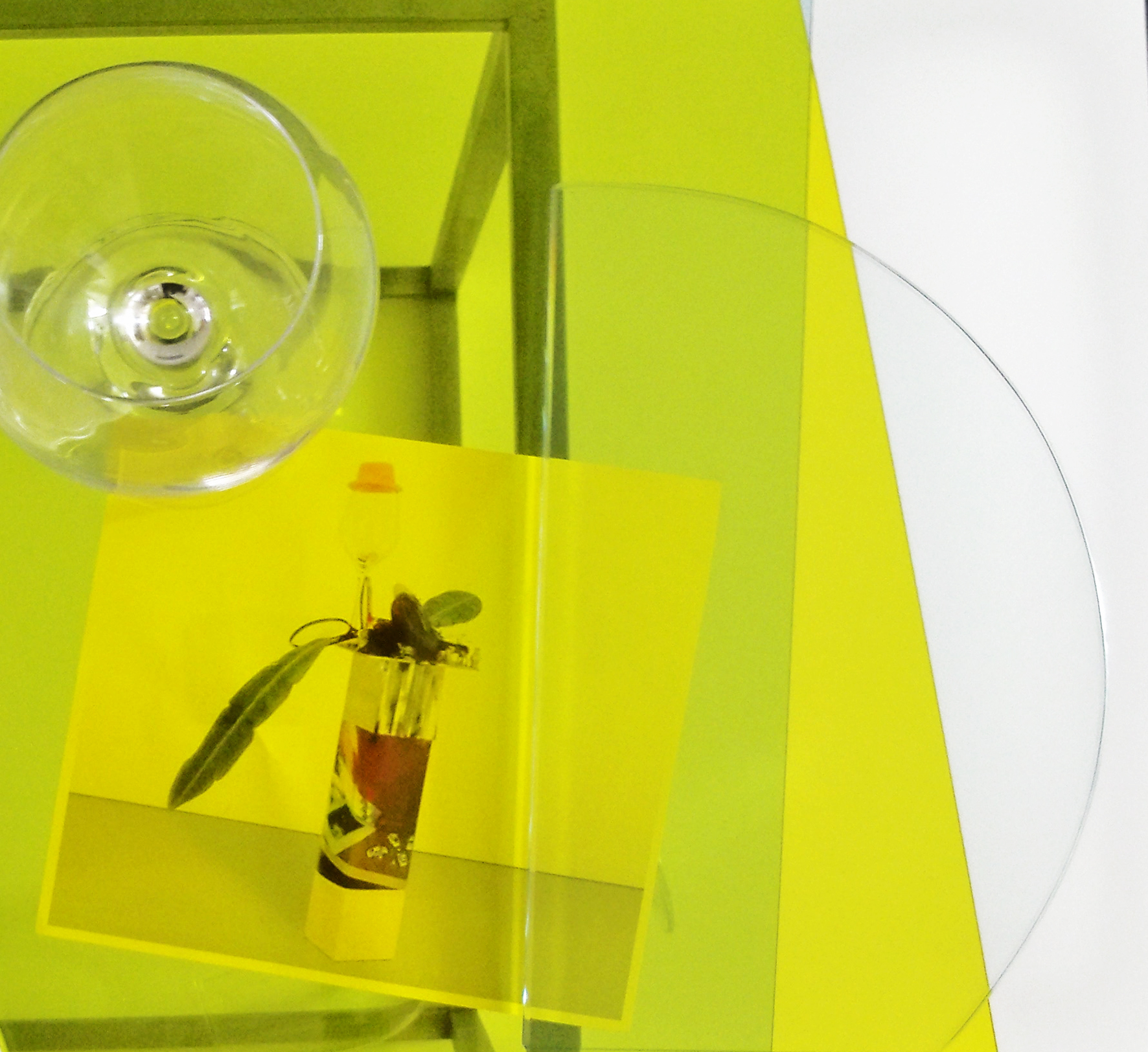
Cin Cin Isa!, 2014, 2014
(From the series Never at the same level), mixed media. Stainless steel, plexiglas, glass, glasses, and inkjet prints, dimensions variable
Courtesy of the artist, Studio Dabbeni, Lugano, and Frutta, Rome - Cesare Pietroiusti
Cesare Pietroiusti was born in 1955 in Roma, where he lives and works.
![]()
- Alice Ronchi
Alice Ronchi (b. 1989, Ponte dell’Olio, Italy). She received her MFA from the Sandberg Instituut in Amsterdam in 2015, after graduating in 2012 from Nuova Accademia di Belle Arti (NABA) in Milan, where she currently teaches Sculpture in the international program. In 2021, she designed the Formula 1 trophy for the Imola Grand Prix, commissioned by Pirelli in collaboration with Pirelli HangarBicocca. In 2022, her public sculpture È Amore, created for the Una Boccata d’Arte festival and curated by Fondazione Elpis and Galleria Continua in the village of Montemarcello, became a permanent installation. In 2024–2026, she created a permanent installation for Terminal 1 of Milan Malpensa Airport, curated by Museo MAGA in collaboration with SEA Milan Airports. Her work has been exhibited at institutions in Italy and internationally, including: Galleria Civica di Trento, Trento, and Palazzo Reale, Milan (both 2015); MACRO, Rome, and Stadtgalerie, Kiel (both 2016); MAMbo, Bologna (2018); MAXXI, Rome (2019); GAM Torino, Turin (2020); Triennale Milano and ICA Foundation, Milan (both 2023); MAC Museum, Lissone (2024).
![]()
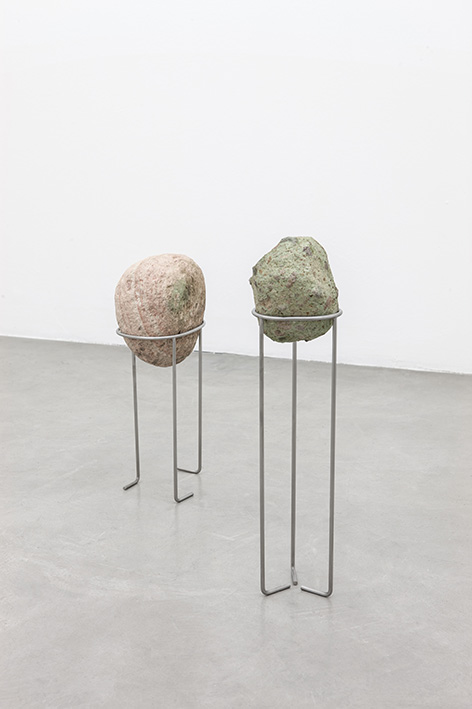
Heidi and Edie, 2014
From the series Kilimanjaro, 2014, stainless steel and stones, dimensions variable
Courtesy the artist and Francesca Minini Gallery, Milan - Namsal Siedlecki
Namsal Siedlecki was born in 1986, U.S.A. He lives and works in Seggiano, Italy.
![]()
Group Show, 2014
Clay, acrylic on canvas, ink on paper, dimensions variable (detail)
Courtesy of the artist - Alessandra Spranzi
Alessandra Spranzi was born in 1962 in Milano, Italy, where she lives and works.
![]()
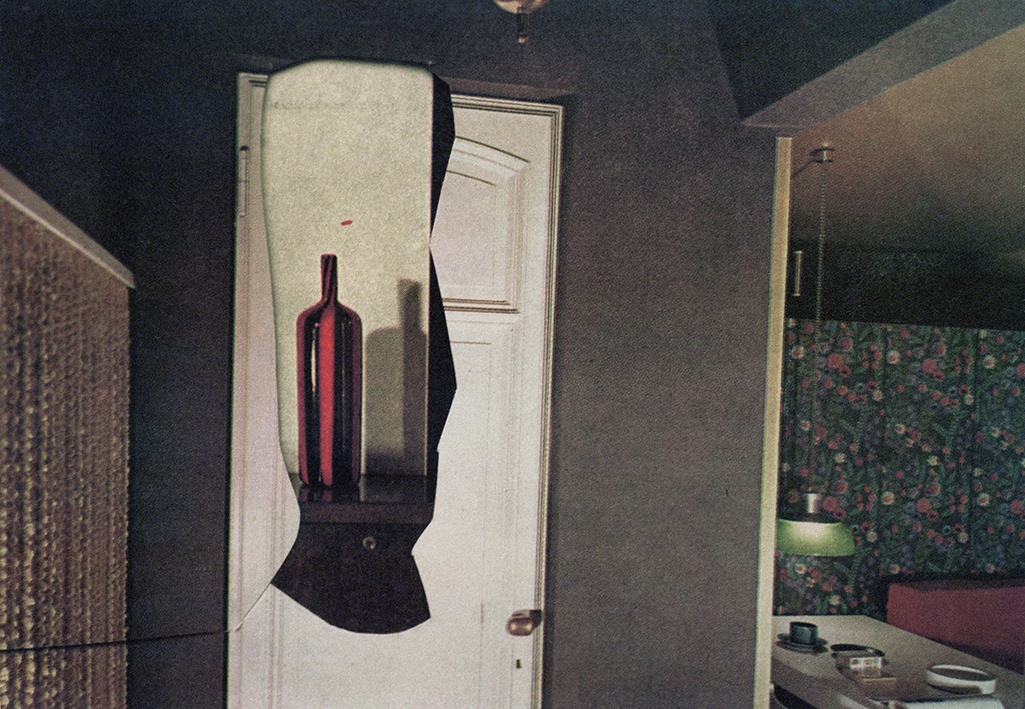
Nello stesso momento #14, 2012-14
From the series Nello stesso momento, 2012-14
Photographs, 42.5 x 35 cm, Courtesy of the artist and P420 Arte Contemporanea, Bologna, Italy - Serena Vestrucci
Serena Vestrucci (b. 1986, Milan, Italy). Vestrucci’s works explore the obviousness of small things, giving voice to what is often hidden, forgotten, or sidelined. Through a playful yet direct and provocative language, the ordinary is decontextualized, or in her own words “moved to a different field of action”. Vestrucci manipulates these everyday elements via a diverse range of artistic processes and language impositions, yet the original identity of whatever triggers her attention is forever preserved, even treasured, for it to achieve a new meaning. Ultimately, Vestrucci turns things into images. Vestrucci has exhibited her work in numerous institutions including: Vittoriano (Rome, 2026); Pavillon de l’Esprit Nouveau (Bologna, 2026); Italian Cultural Institute (Oslo, 2025); Museo Madre (Naples, 2024); Istituto Villa Adriana e Villa d’Este (Tivoli, 2024); Renata Fabbri Gallery (Milan, 2024 and 2021); Building Gallery (Milan, 2024); Palazzo Lomellino (Genoa, 2024); Italian Cultural Institute (Warsaw, 2023); Italian Cultural Institute (Kraków, 2023); Casa Gramsci (Turin, 2023); Palazzo Ducale, La Biennale di Gubbio (Gubbio, 2023); Una Boccata d’Arte, Fondazione Elpis (Cetara, 2023); Palazzo Merulana (Rome, 2023); Palazzo Grillo (Genoa, 2023); Museo MAXXI (Rome, 2023); Stefan Gierowski Foundation (Warsaw, 2022); Foundation Made in Cloister (Naples, 2022); Imago Mundi Foundation (Treviso, 2021); Pastificio Cerere Foundation (Rome, 2020); Palazzo Del Medico (Carrara, 2020); FuoriCampo Gallery (Siena, 2018 and 2016); Palazzo Reale (Milan, 2017 and 2015); GAM Gallery of Modern Art (Verona, 2017); Villa Croce Museum of Contemporary Art (Genoa, 2015); Sandretto Re Rebaudengo Foundation (Turin, 2014); GAM Gallery of Modern Art (Milan, 2012); Casa Testori (Novate Milanese, 2019); Italian Cultural Institute (New York, 2018); Italian Cultural Institute (London, 2018); Bevilacqua La Masa Foundation (Venice, 2017 and 2012); FRISE Künstlerhaus (Hamburg, 2014); Casa Masaccio (San Giovanni Valdarno, 2014); Stedelijk Museum (‘S–Hertogenbosch, 2011).
![]()
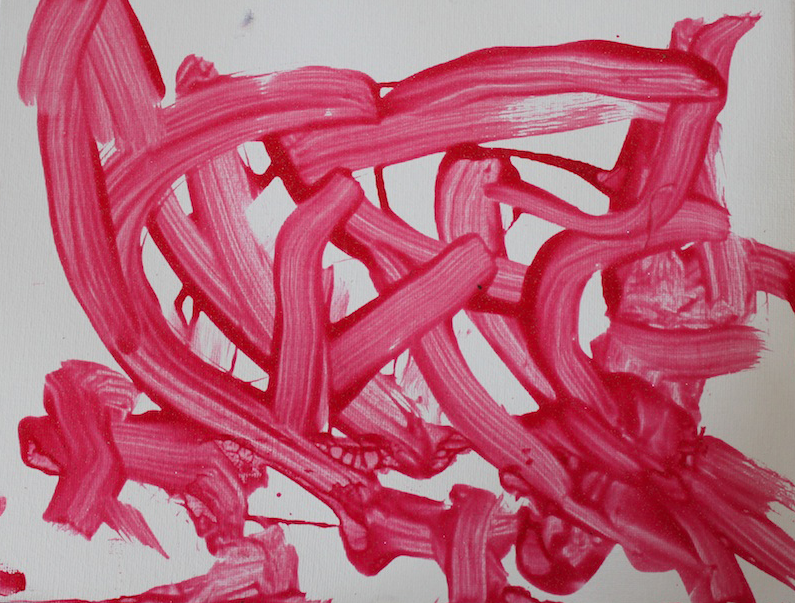
Trucco, 2014
Eye shadow, face powder and lip gloss on canvas. Dimensions variable
Courtesy of the artist
Jury
Beatrix Ruf
Beatrix Ruf (Germany, 1960) is currently the Artistic Director of the Stedelijk Museum Amsterdam, and she was appointed Director/Curator of the Kunsthalle Zürich in 2001. Previously, she had been Director/Curator of the Kunsthaus Glarus, and curator at the Kunstmuseum Thurgau, Warth (Switzerland) between 1994 and 1998. Since 1995 she has been Curator of the Ringier Collection. She has organised exhibitions, written essays and published catalogues on artists such as Jenny Holzer, Marina Abramovic, Peter Land, Liam Gillick, Urs Fischer, Emmanuelle Antille, Angela Bulloch, Ugo Rondinone, Richard Prince, Keith Tyson, Elmgreen & Dragset, Monica Bonvicini, Eija-Liisa Ahtila, Pierre Huyghe/Philippe Parreno: No Ghost just a Shell, Rodney Graham, Isa Genzken, Doug Aitken, Wilhelm Sasnal, de Rijke/de Rooij, Rebecca Warren, Carol Bove, Oliver Payne & Nick Relph, Dominique Gonzalez-Foerster, Sean Landers and many others. Among her last exhibitions, she curated the solo show Avery Singer, Pictures Punish Words, at Fondazione Sandretto Re Rebaudengo, Torino (Italy) in 2015.
Jochen Volz
Jochen Volz (Germany, 1971) is a London-based curator, currently Head of Programmes at Serpentine Gallery, London. He has been named curator of the 32nd São Paulo Biennial, slated for 2016. Volz was previously Artistic Director at the Instituto Inhotim, Minas Gerais (Brazil), where he co-curated many large-scale site and specific projects, as well as numerous exhibitions from the collection. He has contributed to many exhibitions throughout the world, including curating Olafur Eliasson as part of the 17th International Festival of Contemporary Art–SESC_Videobrasil, São Paulo (Brazil) (2011); The Spiral and the Square, Bonniers Konsthall, Stockholm (2011); the Aichi Triennial, Nagoya, Japan (2010); and the Biennial de Lyon, France (2007). In 2009 he organized the international section of the 53rd Venice Biennial, together with Daniel Birnbaum. In 2006 he guest curated for the 27th Biennial de São Paulo a special exhibition project in homage to Marcel Broodthaers. Between 2001 and 2004 he was curator of Portikus, Frankfurt am Main (Germany).
YCRP.FSRR.ORG
©2026 Fondazione Sandretto Re Rebaudengo