YC
RP
FS
RR
Young Curators Residency Programme
Every year since 2007 Fondazione Sandretto Re Rebaudengo promotes the Young Curators Residency Programme Torino. The project aims to support emerging curatorial practice while spreading knowledge of the Italian art scene on an international level.
Young Curators Residency Programme 2017 Coordinated by Lorenzo Balbi
Fondazione Sandretto Re Rebaudengo, Turin, Italy May 17 – October 1, 2017
A house, halfway
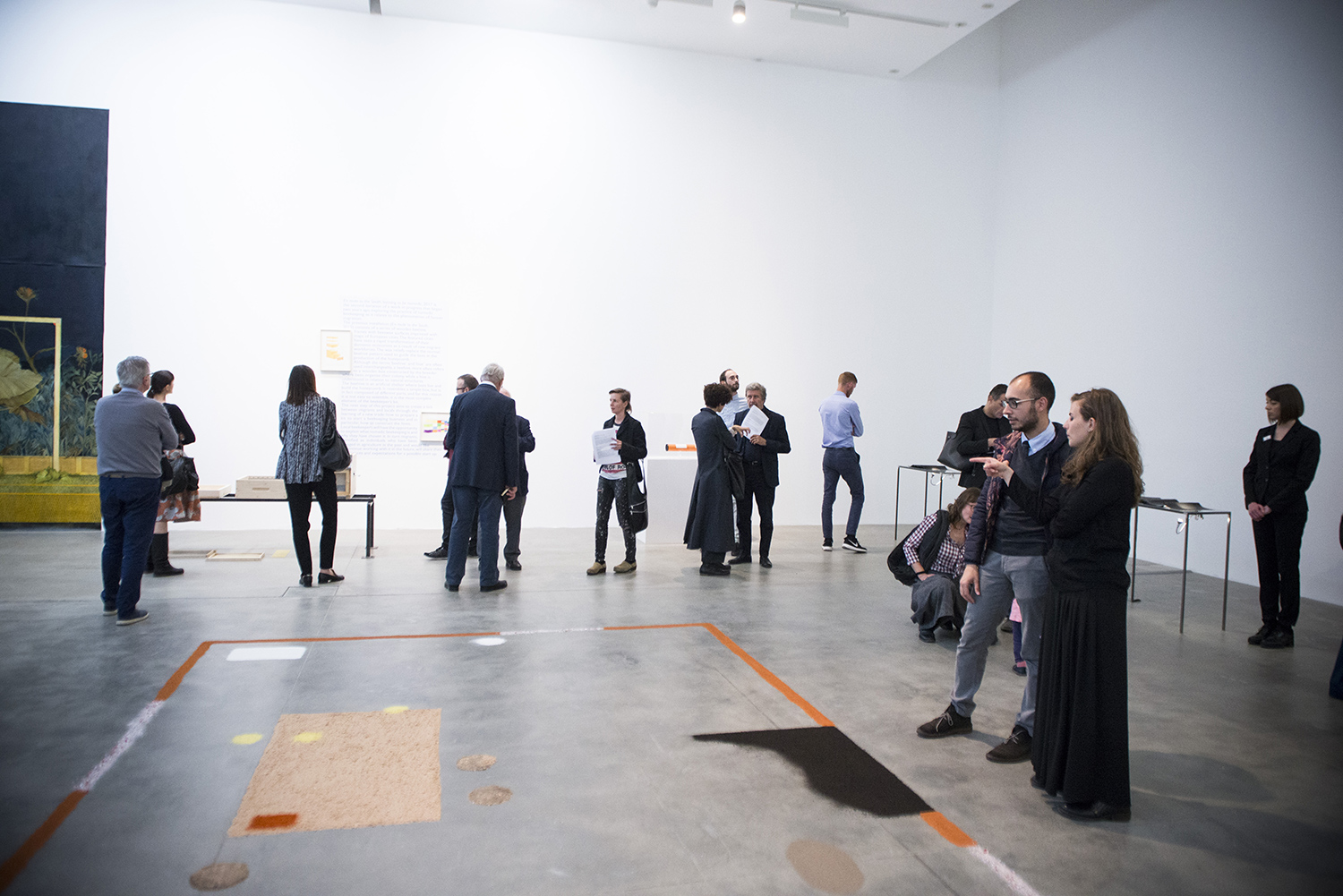
As the curators in residency of the 11th edition of the Young Curators’ Residency Programme at the Fondazione Sandretto Re Rebaudengo in Turin, we were invited to make an extensive tour of Italy visiting each major city and contemporary art institution, and meeting with artists throughout the country. Reflecting on our position as transitory, itinerant residents, in a nation that has historically been a passage into Europe inevitably required us to problematise the following conflict: the pursuit of pleasure by elites embarking on a Grand Tour of Italian culture — a category from which we cannot exclude ourselves — and the urgency of migration for those seeking refuge and safe passage into Europe. The exhibition presents eleven emerging and established Italian artists, whose contributions include new commissions and existing works that are in dialogue with the concept of a halfway house. This is a term that refers to the shelters used for recent prisoners reintegrating into society, a stopping point for travellers along their journeys, or a compromise between two opposing points of view. The halfway house generates a hiatus where life is put on hold but decisions must be taken, everyday tasks accomplished, relationships sustained and physical problems nursed. As a curatorial framework, the halfway house becomes a place to engage with the different motivations for travel that continue to define Italy as a site of passage. The exhibition will therefore be a moment to explore artistic practices that present affective, intellectual, social, cultural and economic reflections on these parallel histories of transit, and the liminal suspension that they create.
Curators
Andrew de Brún
Andrew de Brún (Dublin, 1990) is an independent curator and researcher based in London. His practice is concerned with the importance of the landscape and urban environment as relating to memory and as being symptomatic of a national cultural identity. He has written extensively on the subject of ruination and on the significance of photography in tracing the shifting of social and political environments. He graduated from the National College of Art and Design in Dublin in 2012 with a Joint BA in Fine Art and History of Art. In 2016 he graduated with an MFA in Curating from Goldsmiths College, University of London, while also curating Shadows on the Walls; a photography exhibition in the Guardian Exhibition Space in King’s Cross, London that marked the centenary of Dublin’s 1916 Easter Rising. He is also committed to promoting the significance of gallery education having worked in learning with institutions such as the V&A Museum, White Cube and the Whitechapel Gallery, London.
Kateryna Filyuk
Kateryna Filyuk (Ukraine, 1986) lives and works in Kiev and Amsterdam. She is a curator and art critic. She holds a MA in Philosophy from Odessa I.I. Mechnikov National University. She has worked for the First Kyiv International Biennale of Contemporary Art ARSENALE 2012 as Managing Editor of the catalogue and Coordinator of the Discussion Platform. In 2012, she took part in the 4th Gwangju Biennale International Curator Course, followed by the MMCA International Research Fellowship at the National Museum of Modern and Contemporary Art of Korea with a final essay on Korean New Media Art, in 2014. She was a participant of the 21st course of De Appel Curatorial Programme 2015/16. Filyuk has been involved in the organization of exhibitions in various galleries and institutions and contributed to a number of Ukrainian and international magazines and online platforms such as Art Ukraine, and Metropolis M. Her recent curatorial projects include: Fake Hikers, MMCA Changdong residency, Seoul; One day in the life, Multimedia Space for Contemporary Culture Nástupište 1-12, Topoľčany (Slovakia); Rien ne va plus? Faites vos jeux! as a part of Untitled (Two Takes on Crisis), De Appel arts centre, Amsterdam; Social Contract, Izolyatsia, the Former Site of the Monument of Lenin in Kiev. Currently she is a curator at Dymchuk Gallery, Kiev. Filyuk is a project manager for Curatorial Program for Research.
Inês Melícias Geraldes Cardoso
Inês Melícias Geraldes Cardoso (São Paulo, 1990) grew up in Lisbon. After graduating in Art History and Social Anthropology from the University of St Andrews, Inês worked as a curatorial assistant at Kunsthalle Lisbon and has previous work experience from institutions including the Peggy Guggenheim Collection and Situations, New York. Her research interests lie in the intersections between theory and practice and her MA dissertation at the Royal College of Art investigates exhaustion as a generative point of departure for curatorial practice. In her practice as a curator and writer, Inês seeks to develop collaborative models of practice that foreground artists and their work. This approach has been crucial to recent projects, including Sorry you missed me at the Royal College of Art and Planta: Notes on Botanical Dissidence at Acme Project Space. Forthcoming projects include an exhibition in Lisbon, selected in the 2016 edition of EGEAC’s Young Curators Open Call.
Coordinator
Lorenzo Balbi
Lorenzo Balbi (Turin, 1982) is the current Director of the Verona Museums. He graduated from Ca’ Foscari University, Venice with a BA in Fine Arts and Preservation of Cultural Heritage and from the University of Turin with an MA in Contemporary Art History. He was artistic director at Verso Artecontemporanea Gallery, Turin, an exhibition space devoted to research on emerging artists from South-East Asia. He was part of the board of Nesxt, Independent Art Festival, curator of the Live Program for DAMA, the new experimental fair for emerging international galleries, and curator of the Pomilio Blumm Prize, a prize for contemporary artists promoted in collaboration with Magnolia and Sky Arte HD. From 2006 to 2017 at the Sandretto Re Rebaudengo Foundation in Turin, he taught Curatorial Methodology at CAMPO, a course for curators, and was involved in the organization and development of exhibition projects in the institution’s spaces in Turin and Guarene d’Alba, as well as the exhibition programs of the Sandretto Re Rebaudengo Collection abroad. He followed the project Residency for Young Foreign Curators as assistant curator in 2009 (coordinator Ilaria Bonacossa), in 2011 and 2012 (coordinator Stefano Collicelli Cagol), until becoming the coordinator for three editions from 2015 to 2017. In 2018, he assumed the artistic direction of ART CITY Bologna, a series of exhibition events in the city promoted on the occasion of Arte Fiera. Professor of Art Systems at the DAMS of the University of Bologna, he is a member of the board of directors of AMACI – Association of Italian Contemporary Art Museums and of the coordination of the Italian Contemporary Art Forum. From 2017 to 2026, he was the artistic director of MAMbo – Museum of Modern Art of Bologna and he took on the role of Head of the Modern and Contemporary Art Department of the Bologna Museums Institution, to which he is attached, in addition to MAMbo, Villa delle Rose, Museo Morandi, Casa Morandi, Museo per la Memoria di Ustica and Residenza per artisti Sandra Natali. His texts and articles were published by several publications and magazines, including: Il Giornale dell’Arte, Inside Art, Artribune, Mousse, La Stampa, Exibart, ATP Diary, Il Giornale dell’Architettura.
Artists
- Afterall
Afterall is the name of a brother-and-sister artistic duo: Silvia (1975, Napoli, Italy) and Enzo Esposito (1977, Napoli, Italy). They both live and work in Napoli.
![]()
Album Amicorum, 2017
Carbon paper, glass, raw iron, dimensions variable
Courtesy of the artist - Elisabetta Benassi
Elisabetta Benassi was born in 1966 in Roma, where she lives and works.
![]()
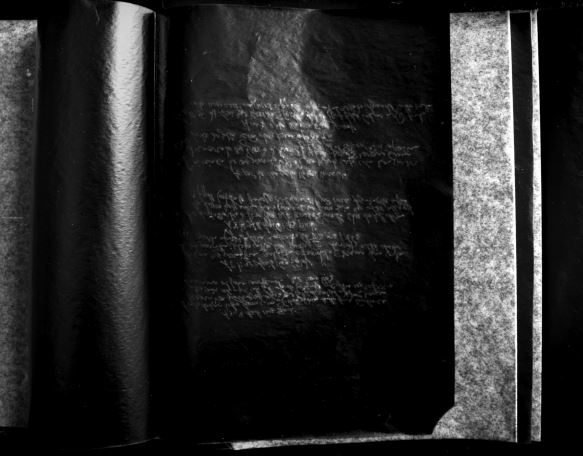
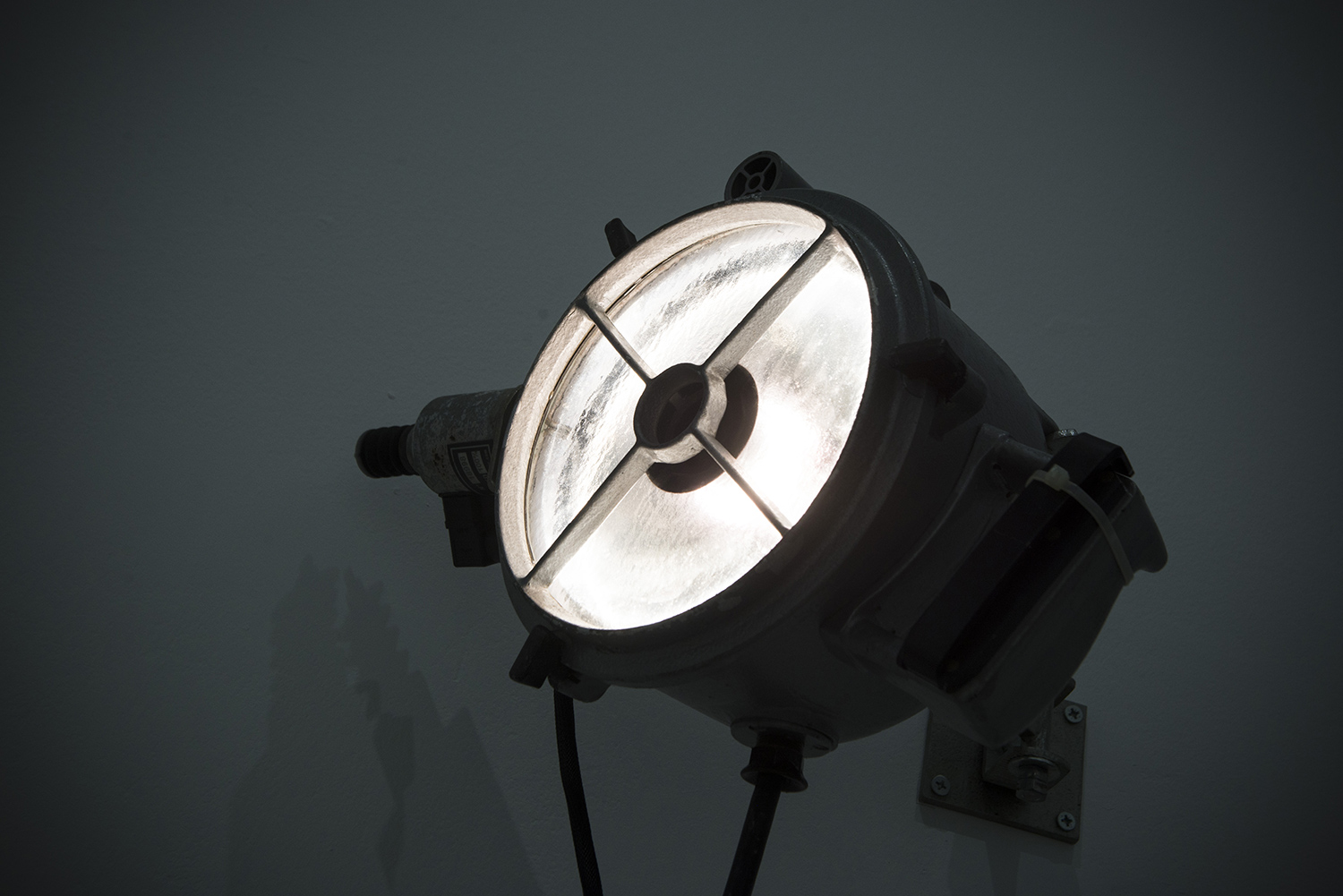
CHE FARE? (WHAT IS TO BE DONE?), 2009
Morse lamp, wooden box, electronic unit, electric cables,
dimensions variable
Courtesy of the artist and Magazzino, Rome![]()
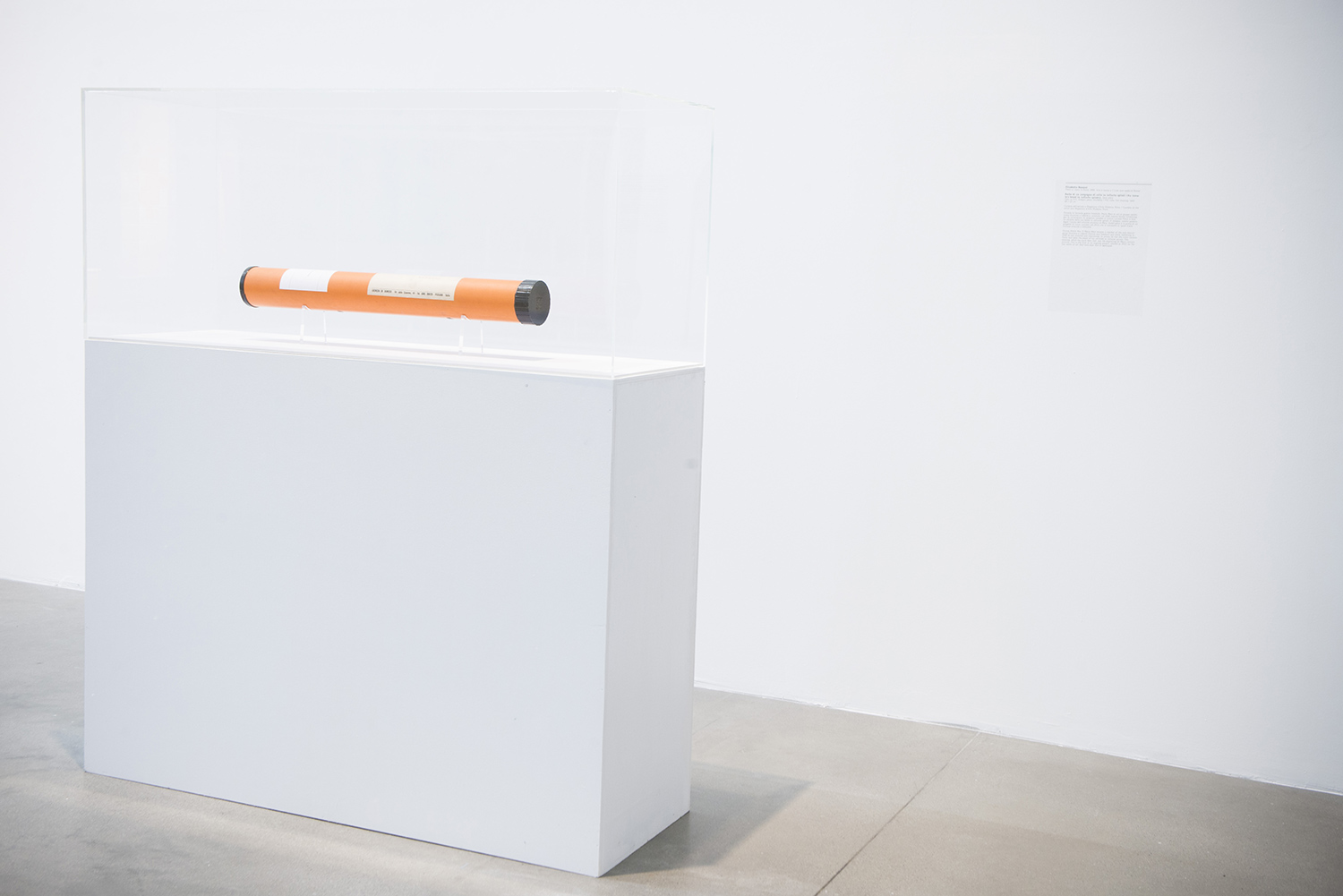
Barba di un compagno di cella in inifinite spirali (An inmate’s beard in infinite spirals), 1945—2013
PVC tube, lost drawing, label, 68 × 10 cm in diameter
Courtesy of the artist and Magazzino, Rome - Francesco Bertelé
Francesco Bertelé is a visual artist who traces his research between exploration and experience. Through the intricate relationship between humanity and nature, he examines pressing political and social issues. By synthesizing collective data with personal practice, he creates poetic and visionary intermedia works. He investigates how digital episteme shapes social imagery and the perception of reality—examining how technological mediation influences perception across cultural, social, and environmental contexts. The human body is at the epicenter of his practice, regarded as both an object of control and a site of resistance, whether in terms of physical mobility or perceptual management. This concern has led him to intentionally live for extended periods in ‘border regions’—places where people undergo profound biographical transformations. His artistic approach is grounded in direct action and responsive exchange with encountered realities, realized through participatory, inter-present processes. Complementing this, his methodology operates through collective intelligence in synergy with professional networks. Since 2019, he has been part of the Wurmkos collective and serves as P.M. & Advisor for Recipient.cc. He is the founder and artistic director of a2410.it, Carrozzeria Margot, and Mobeel. His archive and studio are based in Canzo, Italy. His works have been exhibited internationally, including at: Malta Biennale 2026; Historical Museum of Bosnia and Herzegovina, Sarajevo; KC exDom USOJ, Bihać, BIH; Museo Madre, Napoli; Bulevard Art and Media Institute,Tirana ; Mediamatic, Amsterdam; Fondazione Sandretto Re Rebaudengo, Torino; Museo del Novecento, Milano; Centro per l’Arte Contemporanea Luigi Pecci, Prato; Fondazione Arnaldo Pomodoro, Milano; ‘A cielo aperto’, Latronico; Skaftfell project space, Center for Visual Art, East Iceland; 3rd Land Art Biennial LAM 360°, Mongolia; Sinop Biennale, Sinop (Turchia).
![]()
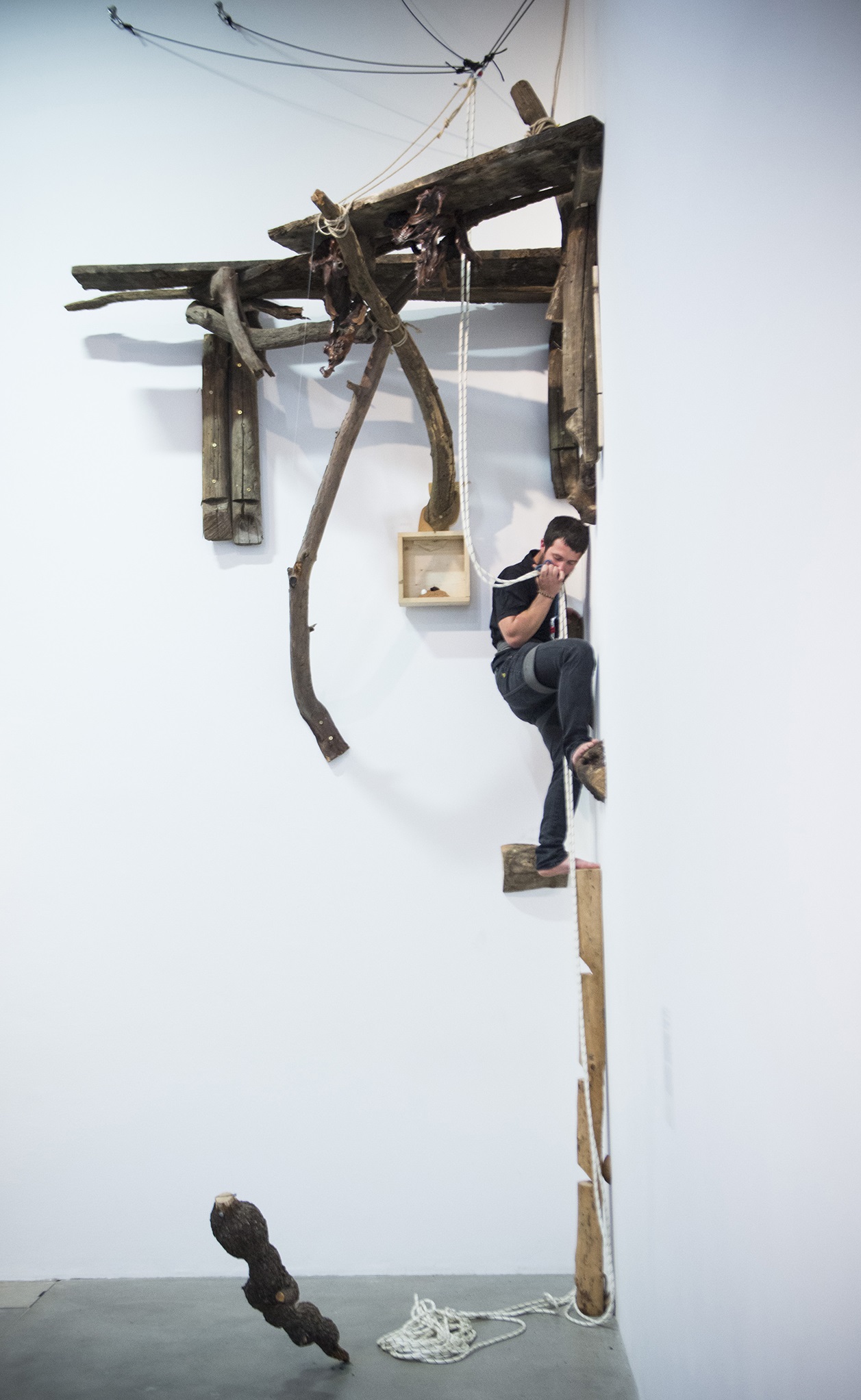
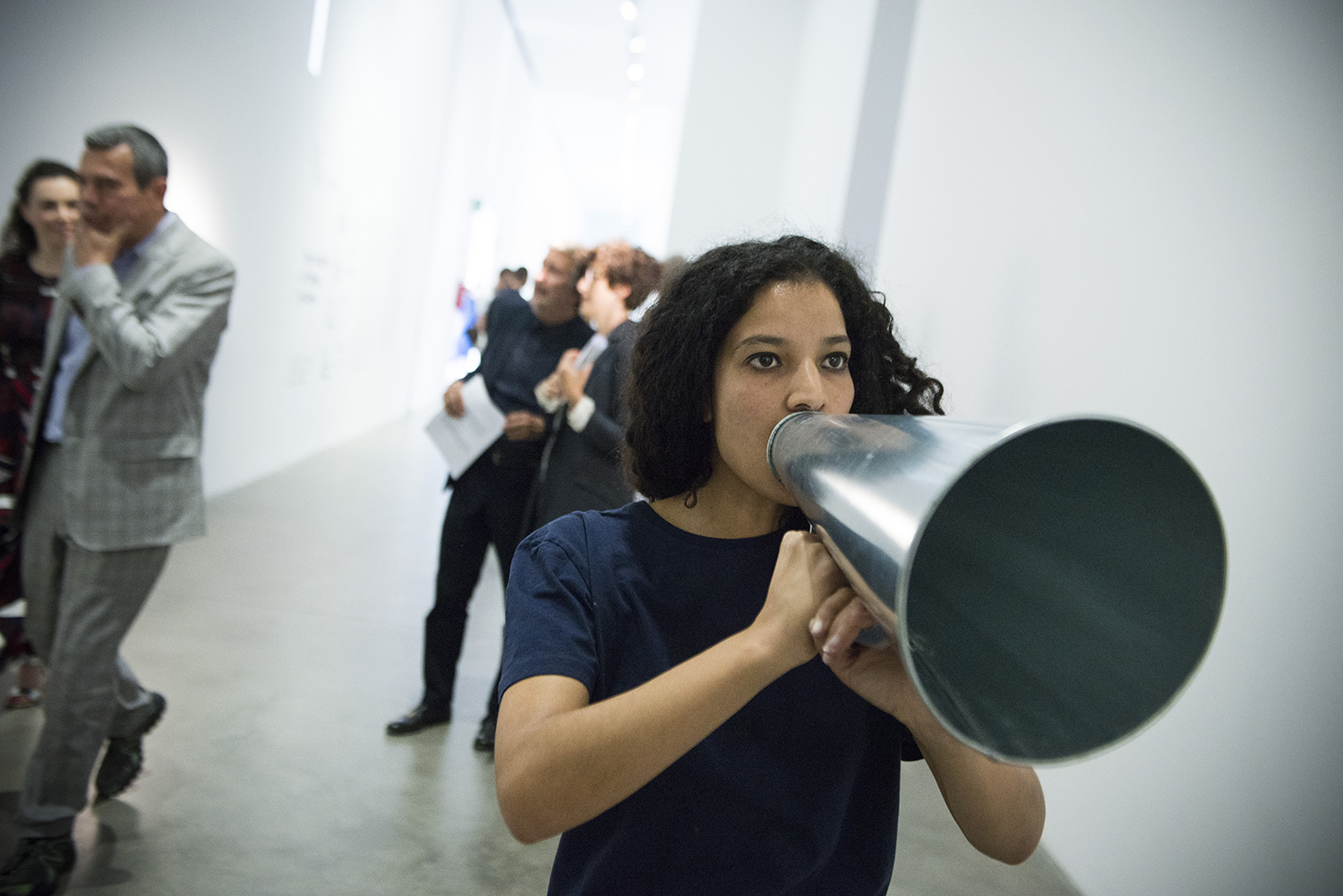
A lingua trova a gente (The tongue finds people), 2017
Para-performance and site specific installation, dimensions variable
Courtesy of the artist - Ludovica Carbotta
Ludovica Carbotta (Torino, 1982) lives and works in Barcelona (ES). Her practice focuses on the physical exploration of the urban space and how individuals establish connections with the environment they inhabit. In recent works, by combining installations, texts and performances, she is researching on fictional site specificity, a form of site-oriented practice that considers imaginary places or embodies real places with fictional contexts, recovering the role of imagination as a value to construct our knowledge. Carbotta has completed an MFA at Goldsmiths University in London (2015). Her work was presented at the 58th International Art Exhibition, May You Live in Interesting Times, Venice Biennale (2019), curated by Ralph Rugoff. Recent solo exhibitions: Column Press, Bombon Projects, Barcelona (2026); Città, Città, Radar, Milano (2025); Constructor de mundos muy parecidos al nuestro, Espai 13, Fundació Miró, Barcelona (2025); Very Well, on my Own, MAMbo, Bologna (2024); I come from outside of myself, European Pavillion, OGR, Turin (2022); Growing Pains, Sala Veronicas, Murcia, Spain (2021); Paphos, Bombon Projects, Barcelona, Spain (2021); Die Telamonen, Bündner Kunstmuseum, Chur, Switzerland; Monowe, Fondazione Sandretto Re Rebaudengo, Torino (2019); smART, Roma (2019); Artissima Present Future, Torino (2018); Marselleria, New York (2018); Marta Cervera Gallery, Madrid (2017); ON Public – Monowe, Bologna (2016); A motorway is a very strong wind, Care Of, Milan (2014); Vitrine 270° – Without Walls, Galleria Arte Moderna, Turin (2013); Greater Torino, Sandretto Re Rebaudengo Foundation, Turin (2011). Among her recent group shows: Scuola Piccola Zattere (Venezia, IT), KW Institute for Contemporary Art, film screening (Berlin, DE), Gasworks, film screening (London, UK), IVAM, (Valencia,ES), Teatrino Palazzo Grassi, (Venezia, IT), MACRO Museum (Rome, IT), Galleria Nazionale d’Arte Moderna e Contemporanea (Rome, IT), Tecla Sala (Barcelona, ES),Drawing Center (New York, US), EACC (Castelló de la Plana, E), La Casa Encendida (Madrid, E), Mambo (Bologna, IT), Palazzo Fortuny (Venice, IT) Kunstlerhaus Museum (Graz, AU), MAXXI Museum (Rome, IT), Fondazione Sandretto Re Rebaudengo (Turin, IT), Hangar Bicocca (Milan, IT), Dublin Contemporary (Dublin, IRL), Matadero (Madrid, E), Swiss Institute (Rome, IT), Les Instants Chavirés (Paris, FR). She is the co-founder of Progetto Diogene, an International Residency Program in the public space and The Institute of Things to Come, a research centre on futurological scenarios. She was awarded the Ariane de Rothschild Prize, Milan (2011), the Premio Gallarate (2016), International Fellowship Gasworks, London (2016), and the Special Mention at Premio ITALIA, MAXXI Museum, Rome (2016). In 2017 she is fellow researcher at Jan Van Eyck Academie, in Maastricht, in 2018 recipient of New York Prize, ISCP/Columbia University. She currently teaches Sculpture at BAU, Barcelona University Centre of Art and Design and is a PhD student on the PhD course in Languages, Materials, Processes and Sustainability in Contemporary Artistic Production at the Academy of Fine Arts in Bologna.
![]()
Plenum, 2015
Concrete, 80×60×40 cm, installation view, dimensions variable
Courtesy of the artist - Paolo Chiasera
Paolo Chiasera (b. 1978, Bologna, Italy) works across installation, video, painting, performance, architecture, curating, and writing. These mediums often overlap in his analysis and staging of collective myths, cultural symbols, and icons. Through manifold narratives he retraces the interactions between history and power, social groups, and the loss of control. More recently his practice has focused on painting in its expanded field of appearance and use. Chiasera’s work has been exhibited internationally, with solo shows at Accademia Carrara, Bergamo (2025); Martina Simeti, Milan (2025, 2024); PSM, Berlin (2017, 2012); Villa Medici, Rome (2016); Vleeshal, Middelburg (2014); MAN, Nuoro (2014); MAC, Lissone (2013); Galleria Massimo Minini, Brescia (2011, 2003); Francesca Minini, Milan (2012, 2010): S.M.A.K., Ghent (2010); MARTa Herford (2009); MACRO, Rome (2008); MAMbo, Bologna (2006); and W139, Amsterdam (2005). His work has been included in group exhibitions at Musei Civici di Macerata (2026); Pinacoteca Nazionale, Bologna (2025); Fondazione Prada, Venice (2018); Fondazione Sandretto Re Rebaudengo, Turin (2017, 2007); Bergen Kunsthall (2011); Museo Reina Sofía, Madrid (2009); and MAXXI, Rome (2007). In 2019 he conceived True-False Stories for the Réseau Musées Valais, Switzerland.
![]()
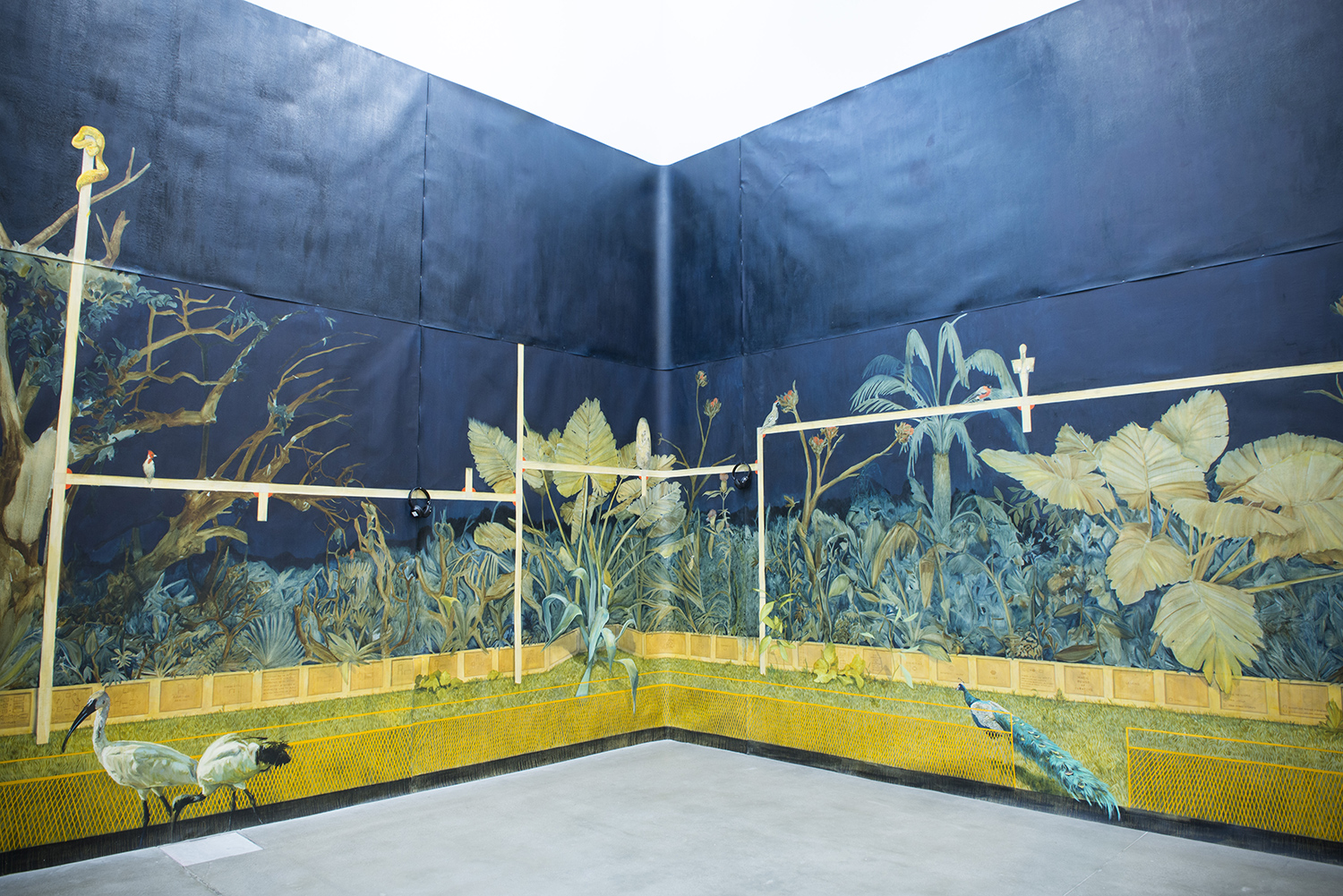
The garden of Sardinia, Cyprus and Jerusalem, 2014
Installation view, Painted canvas, 445 × 2,524 cm
Courtesy of the artist and Daniel Marzona, Berlin
- Gandolfo Gabriele David
Gandolfo Gabriele David (Polizzi Generosa, 1968) is a visual artist based between Palermo and San Sebastián. His artistic formation was shaped through years of collective work within Dimora OZ, a multidisciplinary context in which relational processes and site-responsive approaches established the conceptual and methodological ground of his research. His work develops through sustained engagement with places and communities, interweaving memories and ritual forms with materials and gestures across the dense network of relations that constitutes each site. Performances, installations and collective actions render these relations perceptible, bringing bodies, matter and more-than-human agency into a shared field. Selected presentations include FSRR Turin, RISO Palermo, Centre d’Art de Montreuil, Mucem Marseille, Mana Contemporary USA, Fondation Iméra, ICC Melbourne, CRAC Occitanie and the archaeological parks of Selinunte and Segesta. He has participated in the Venice Architecture Biennale, Manifesta 12 and 13, BAM, Transeuropa festival and the Expo 2025 Osaka. He co-edited ARKAD (Postmedia Books, 2022) and authored The Bread House (2021). Recent publications include Polis Lexis (2024) and Elyma (2024).
![]()
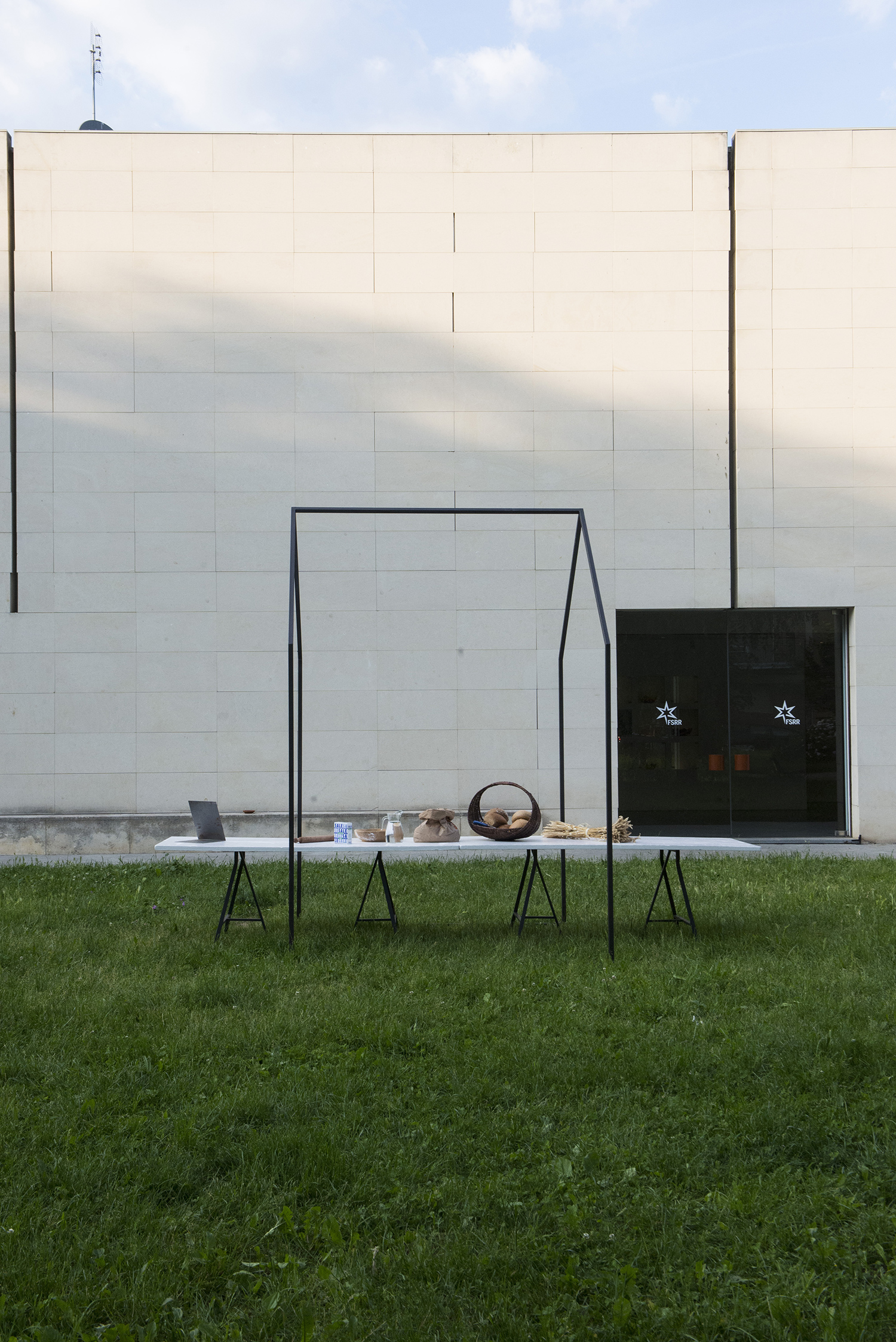
Bet_Lehem/Bread House, 2017
Installation view, dimensions variable
Courtesy of the artist - Nicolò Degiorgis
Nicolò Degiorgis was born in 1985, Bolzano, Italy, where he lives and works.
![]()
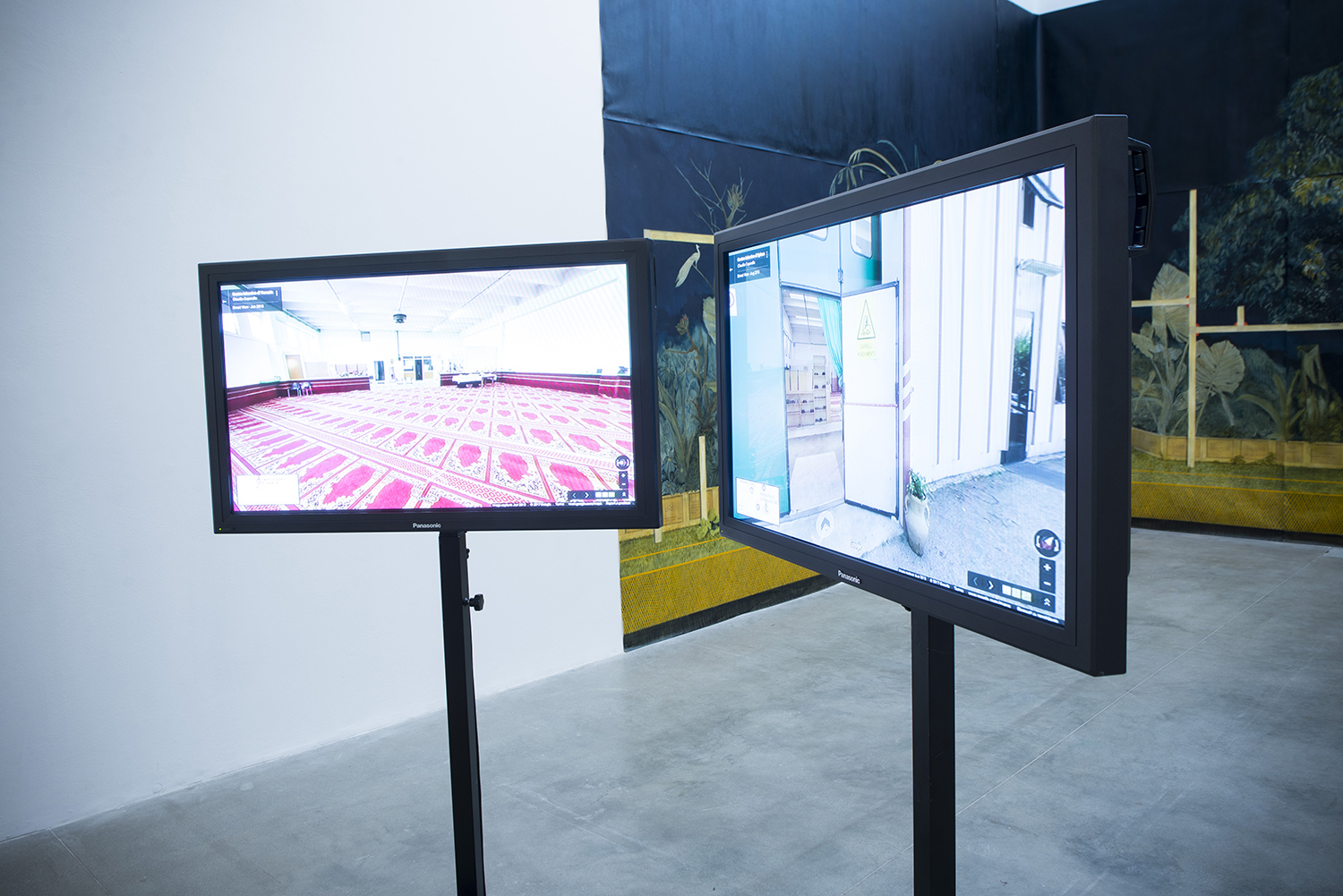
Centro Islamico di Spinea, 2017
Google street view, dimensions variable
Courtesy of the artistCentro Islamico di Venezia, 2017
Google street view, dimensions variable
Courtesy of the artist![]()
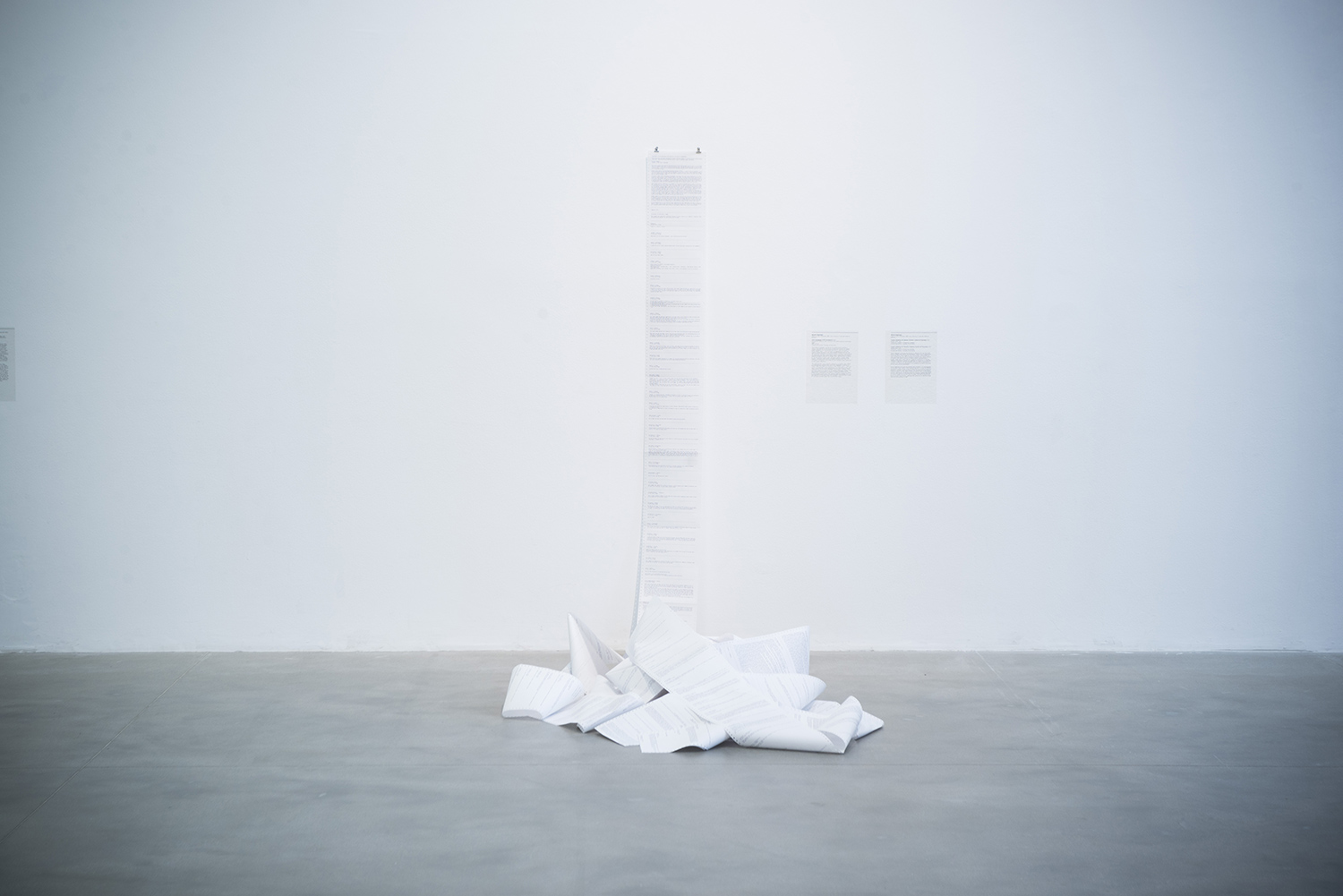
479 Comments, 2017
Dot-matrix print on continuous paper, 180 × 24 cm
Courtesy of the artist![]()
479 Comments, 2017
Dot-matrix print on continuous paper, 180 × 24 cm
Courtesy of the artist - Francesca Grilli
Francesca Grilli was born in 1978, Bologna, Italy. She lives and works in Bruxelles, Belgium.
![]()
The Forgetting of Air, 2016
Performance, 60 min.
Courtesy of the artist - Elena Mazzi & Rosario Sorbello
Elena Mazzi (b. Reggio Emilia, 1984) is a visual artist whose practice focuses on the analysis of specific geographical and socio-political contexts. Her work has been presented in numerous solo and group exhibitions worldwide. Recipient of several national and international awards, she has taken part in numerous residency programs and, since 2015, regularly conducts workshops for schools, academies, and cultural institutions. She is currently pursuing a PhD at Villa Arson – Université Côte d’Azur in Nice. Rosario Sorbello (b. 1978, Catania) lives and works in Turin. In 2014, he co-founded the artist collective Gli Impresari alongside Edoardo Aruta and Marco Di Giuseppe. The collective’s research focuses on forms of representation arising from intellectual speculation and technical innovation, which have informed the development of visual culture since the modern era. Mazzi and Sorbello have been collaborating since 2015 on the project En Route to the South, which over the years has taken various forms and been presented across multiple venues, including Palazzo Ducale in Urbino, Museo Novecento in Florence, PAV – Parco Arte Vivente in Turin, and KORA in Castrignano dei Greci. In 2024, they received the Illy Award from the Pistoletto Foundation to further their research.
![]()
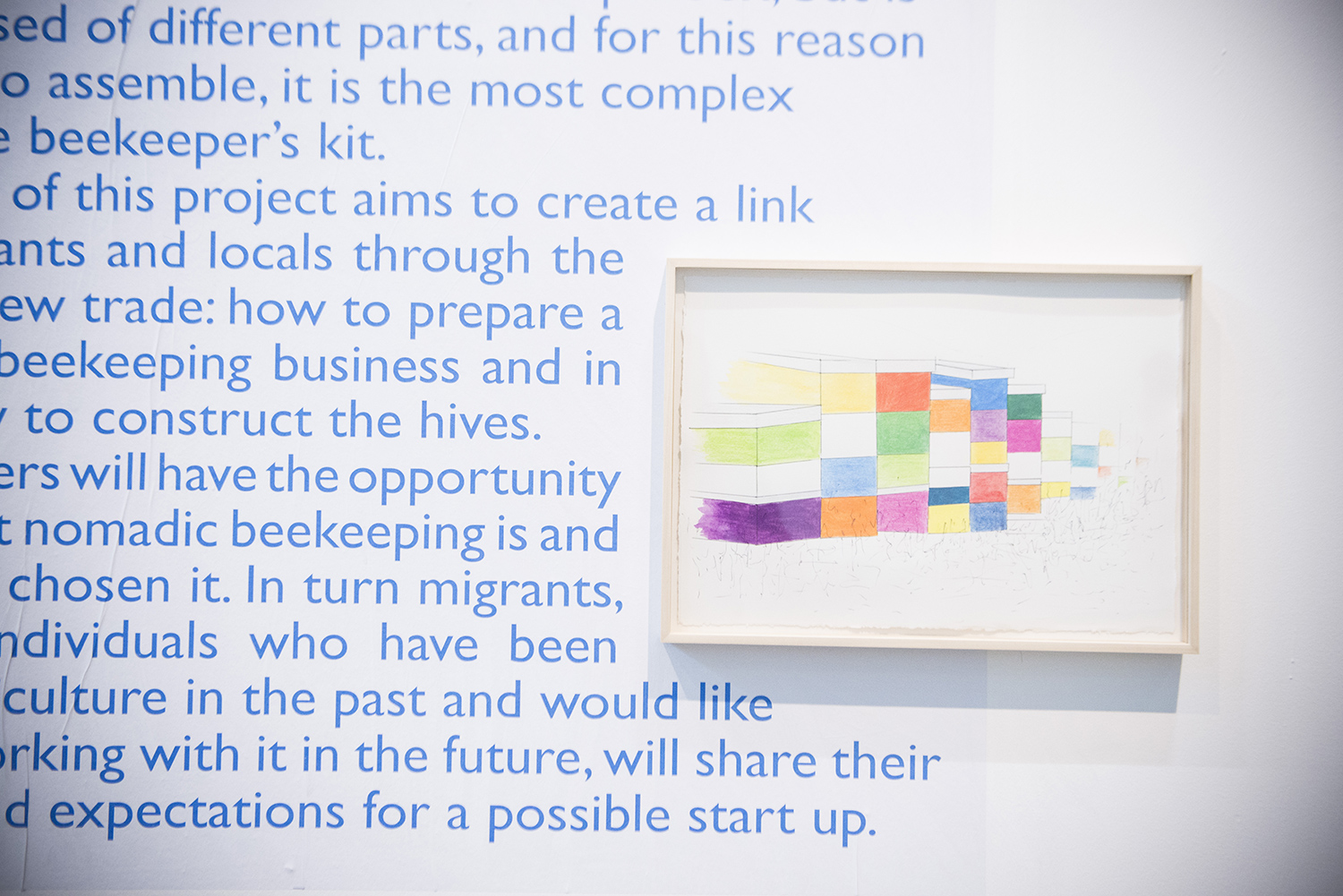
En route to the South, learning to be nomadic, 2017
Ongoing series, drawings, 29 × 42 cm
Courtesy of the artists - Stefan Milosavljevic
Stefan Milosavljevic (b.1992 Serbia) is a multidisciplinary artist working between Italy and Australia. His practice covers painting, sculpture, video, photography and installation. Drawing from autobiographical experience, his work explores the relationship between the visible and the invisible, where identity, memory, desire, intimacy, and spirituality intersect with broader social and cultural realities. His practice is concerned with what exists beyond the tangible: emotional states, inherited memories, spiritual presence, and unseen forces that shape the way we perceive ourselves and the world. Cultural traditions, body politics, masculinity and queer experience become points of departure for investigating the connections between the personal and the collective. Through ambiguous imagery, symbolic gestures, and material interventions, Milosavljevic creates spaces between sensuality and contemplation, vulnerability and resistance, presence and absence. Ambiguity becomes both a poetic and critical tool, allowing what cannot be clearly defined or articulated to emerge. His work ultimately seeks to make the invisible perceptible, inviting reflection on human connection, belonging, and the unseen dimensions of experience.
![]()
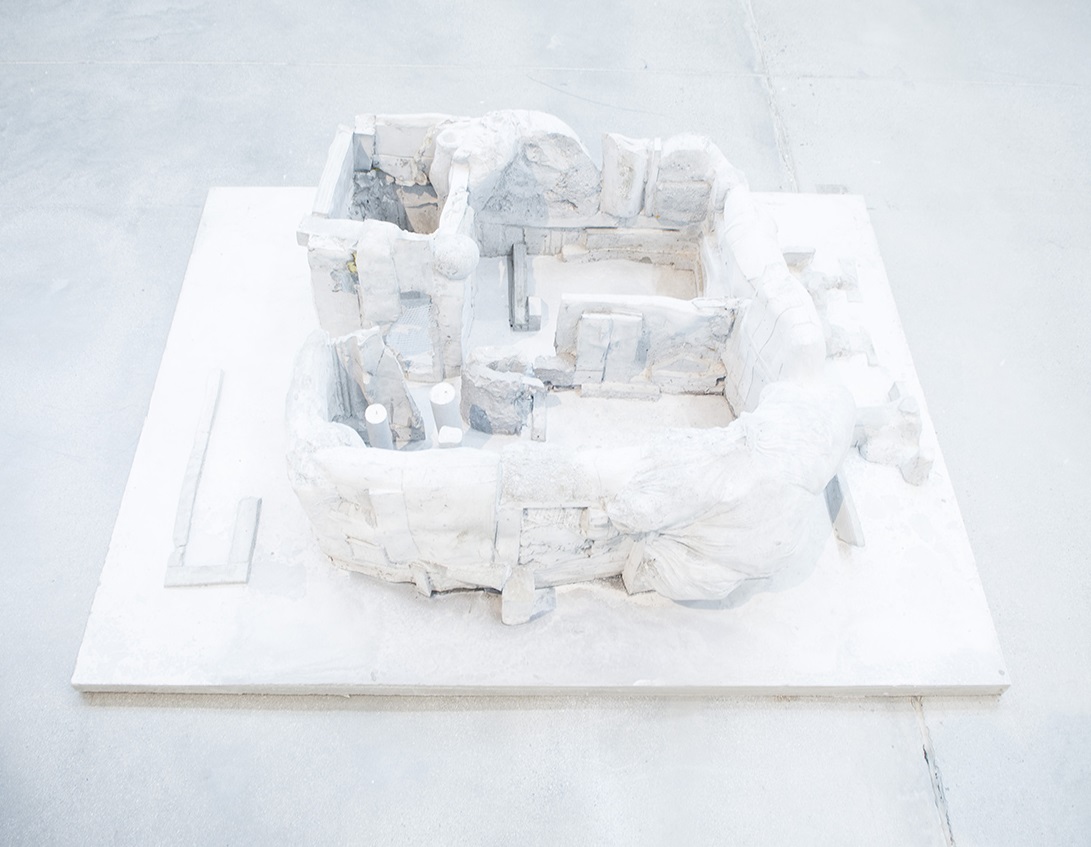
Even the walls know your lies, 2016
Installation view
Bricks, sawdust, glass, ceramics, plaster, ash, concrete and
pigments, dimensions variable
Courtesy of the artist - Carmelo Nicotra
Carmelo Nicotra was born in 1983, Agrigento, Italy. He lives and works in Favara, Italy.
![]()
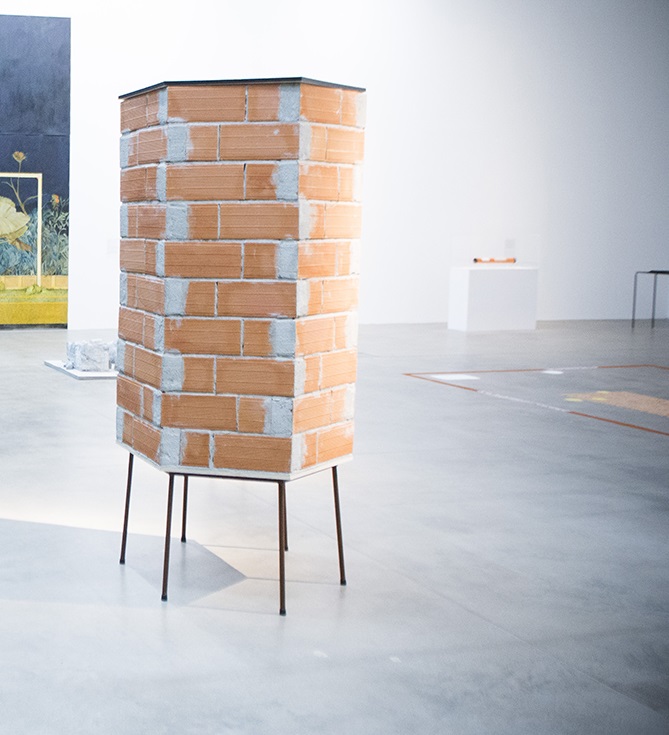
Costruzione esagonale, 2014
Installation view; school desk, brick, cement, 200 × 150 cm
Courtesy of the artist

Jury
Krist Gruijthuijsen
Curator and art critic Krist Gruijthuijsen has been the director of KW Institute for Contemporary Art from 2016 until 2024. At KW, he has curated exhibitions by Hanne Lippard, Ian Wilson, Adam Pendleton, Ronald Jones, Hiwa K, Willem de Rooij, Beatriz González, David Wojnarowicz, Hreinn Friðfinnsson, Hassan Sharif, Leonilson, and Peter Friedl, Michel Majerus, Martin Wong, Enrico David, Jimmy DeSana and Paul P. among others, and has edited numerous publications.
Krist Gruijthuijsen is internationally well-connected and has many years of experience as curator and director of leading international institutions for contemporary art. Gruijthuijsen was artistic director of the Grazer Kunstverein from 2012 until 2016 and held the position of course director of the MA Fine Arts Department at the Sandberg Instituut in Amsterdam from 2011 until 2016. He is one of the co-founding directors of the Kunstverein in Amsterdam and has organized many exhibitions and projects over the past 15 years, including Stedelijk Museum (Amsterdam), Van Abbemuseum (Eindhoven, NL), Arnolfini (Bristol, GB), Project Arts Centre (Dublin), Utah Museum of Contemporary Art (Salt Lake City, US), Institute of Modern Art (Brisbane, AU), Baltic Centre for Contemporary Art (Gateshead, GB), Morris and Helen Belkin Art Gallery (Vancouver, CA), with MoMA PS1 (New York), CAPC musée d’art contemporain de Bordeaux (FR), Museo Nacional Centro de Arte Reina Sofía (Madrid), Centre d’Art Contemporain Genève (CH), Sharjah Art Foundation, Malmö Konsthall (SE) , and Museu de Arte Contemporânea de Serralves (Porto, PT).
Andrea Viliani
Andrea Viliani is an art critic and curator and, since 2013, Director of the MADRE, the public museum of contemporary art founded by Campania Region in Naples, where he organised exhibitions by Francis Alÿs, Thomas Bayrle, Daniel Buren, Mimmo Jodice, Mark Leckey, Fabio Mauri, Boris Mikhailov, Giulia Piscitelli, Vettor Pisani,Walid Raad, Ettore Spalletti, Sturtevant, Padraig Timoney, Mario García Torres/Alighiero Boetti. At MADRE he has produced as well seminars and publications by artists such as Gusmao&Paiva, Stephen Prina and Akram Zaatari and oversaw the ongoing projects Per_forming a collection and Progetto XXI. From 2009 to 2012 he worked as Director of the Fondazione Galleria Civica-Centro di Ricerca sulla Contemporaneità, Trento (Italy); from 2005 to 2009 he was Curator at MAMbo–Museo d’Arte Moderna, Bologna (Italy) where he presented an exhibition program focused on the contemporary legacy of the 60s/70s institutional critique and on a possible new approach to it (“institutional narrative”). From 2000 to 2005 he worked as Assistant Curator at the Castello di Rivoli-Museo d’Arte Contemporanea, Torino (Italy). In 2012 Viliani was one of the six curatorial Agents/Core-Group of dOCUMENTA (13), co-curating with the Artistic Director Carolyn Christov Bakargiev and Aman Mojadidi the related position in Kabul and Bamiyan (Afghanistan). He also curated exhibitions and projects in various other institutions as, among the others, Paweł Althamer (MUSEION, Bolzano, Italy), Gabriele Di Matteo (FRAC Limousin, Limoges, France), David Maljković (GAMeC, Bergamo, Italia), Deimantas Narkevičius (Museo Marino Marini, Firenze, Italia) and Haris Epaminonda (Fondazione Querini Stampalia, Venezia, Italy). Among the 60 “players” of the 2007 Biennale de Lyon, he is a contributor to the art magazines Flash Art, FROG, Kaleidoscope and Mousse.
YCRP.FSRR.ORG
©2026 Fondazione Sandretto Re Rebaudengo